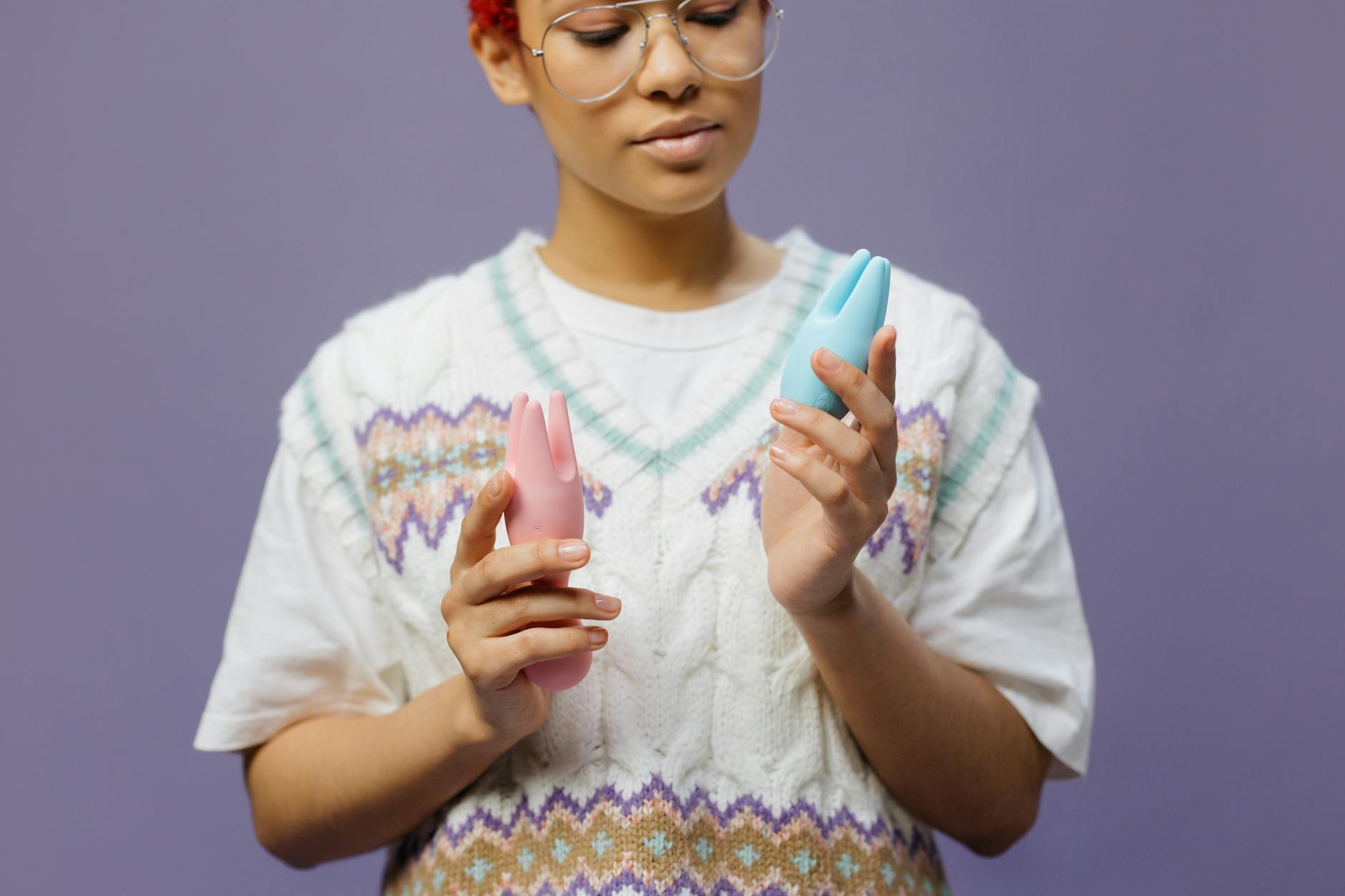
Lemon Vibrator Solo Play vs. Partnered Use: Which Feels Better?
Let's be real. The same lemon vibrator feels completely different depending on whether you're alone or with someone. Not just emotionally. Physically.
Your nervous system literally responds differently. The way you breathe changes. The pressure you apply changes. Even the intensity level you reach for tends to shift. And weirdly, neither version is "better." They're just fundamentally different experiences, and understanding that gap is the difference between good sex and the kind that actually feels customized to what you need that day.
How your body responds differently when you're alone
When it's just you and your lemon vibrator, your pelvic floor behaves differently. You're not managing someone else's breathing or timing. You're not thinking about what you look like from a certain angle. You're not coordinating anything.
What you get instead is pure focus. Your arousal builds at whatever pace actually turns you on, not the pace that feels "sexy" or socially appropriate. Many people find their fastest orgasms happen solo because there's zero ambient anxiety.
Here's the thing though. That speed isn't universal. Some people need a partner present, or at least the fantasy of one, to hit genuine arousal. Others need absolute privacy. Solo play lets you learn which one you actually are, not which one you think you should be.
With a lemon clitoral vibrator, solo play usually means higher intensity and longer sessions. You can keep going if you want. There's no "is this okay for them" calculation happening in the background. You also tend to experiment more with positioning because you're not self-conscious about it.
What changes when someone else is there
The second another person enters the equation, even if they're just watching, your nervous system shifts into a different gear. Some arousal research calls this the "social context effect." That's clinical jargon for "knowing you're being watched changes everything."
Partners often naturally use lower intensity settings with a lemon vibrator because the dynamic becomes about connection, not just sensation. You're reading their face. You're responding to their touch. You might slow down because the moment feels good, not because the intensity got too high.
There's also this weird thing that happens where many people's orgasms feel different when they're partnered. Not better or worse. Just different. Sometimes more full-body. Sometimes shorter. The clitoral sensation might feel less intense but more integrated with what's happening in the rest of your body.
If your partner is actively involved (using the lemon vibrator with you, for example), that introduces an element of play and unpredictability that you don't get solo. They might surprise you with a pattern change. They might watch your face and shift intensity based on your response. That feedback loop is something you literally cannot recreate alone.
The solo play advantage
You have complete autonomy. Full stop.
That sounds obvious, but it matters more than most people admit. When you're using a lemon vibrator alone, you can stop the second something feels off. You can get weird with positioning. You can take 45 minutes and use every pattern on the toy if you want. You can orgasm three times and then just... sit with it. No performance, no recovery timeline that's tied to someone else.
Solo play is also the best way to actually learn your lemon vibrator's patterns and your body's preferences. If you're constantly thinking about your partner's experience, you're not fully learning your own.
There's also a psychological benefit that's sometimes overlooked. Self-pleasure, especially with intention and good tools like a quality lemon clitoral vibrator, is profoundly grounding. It's not about achievement. It's about knowing your own body well enough to give it what it needs. That knowledge transfers into partnered sex.
The partnered play advantage
Connection. Not metaphorical, literal nervous system connection.
When you're with a partner who's actively engaged (whether they're using the lemon vibrator with you, touching you elsewhere, or just present and responsive), your brain is bathing in oxytocin. That changes how pleasure registers. Some people orgasm more easily when partnered. Others have longer orgasms. Some have quiet ones instead of big ones.
There's also the trust element. If your partner is holding the lemon vibrator, you're handing them control. For some people, that surrender itself is arousing. For others, it's anxiety-inducing. Knowing which one you are is valuable data.
Partnered play also tends to extend the pleasure window. You're not chasing the orgasm. You're exploring together. That removes the "did I take too long" pressure that can actually delay arousal when you're alone.
If you've struggled with how long it takes to orgasm with a lemon vibrator, sometimes the shift to partnered play changes the timeline entirely. Not because the toy is different. Because your nervous system is operating under different parameters.
How to optimize solo play
Start by eliminating noise and interruption. Your nervous system needs to know it's actually safe to relax. That sounds dramatic, but it's neurobiology. You can't genuinely let go while half-listening for a door opening.
Give yourself time. Rush sessions are fine sometimes, but your actual baseline arousal often takes 15 to 25 minutes to show up. Most people underestimate this because they're mentally timing the interaction. Solo play is when you can actually honor that timeline.
Experiment with patterns and intensity away from any pressure. Try every setting on your lemon vibrator. Try angles you'd never try partnered. Use it on different areas. You're gathering intelligence about your own pleasure.
One overlooked thing: where you position yourself. Some people reach orgasm faster or easier in specific positions. Sitting might work better than lying back. Kneeling might unlock something neither position achieves. You get to test this without someone waiting.
How to optimize partnered play
Communication beforehand is everything. Not a clinical conversation. Just, "What are you in the mood for?" Is this about connection or efficiency? Is someone stressed and need to relax? Do you both want to try something new?
Speed up or slow down together. If you're using the lemon vibrator together, pay attention to each other's breathing and responsiveness. Your partner can feel when you shift deeper into arousal. They can match that shift instead of holding a steady rhythm.
Take turns with control. Sometimes you hold the lemon vibrator. Sometimes they do. The experience of directing versus receiving is surprisingly different and worth exploring both.
Check in after. Not analytically. Just, "How was that?" Sometimes something that felt incredible for you felt just okay for them. Sometimes the opposite. That data helps you both show up better next time.
When to choose solo vs. partnered
Choose solo play when you need to check in with your own body. When you're stressed. When you're learning a new toy. When you want zero external expectations.
Choose partnered play when you want connection, when you want to share an experience, when you're trying to rebuild intimacy, or when you specifically want the different nervous system state that partnership creates.
Here's the secret though. You don't actually have to choose. The couples I work with who report the strongest sexual satisfaction do both regularly. They have their solo practice (which keeps them connected to their own pleasure) and their partnered time (which keeps them connected to each other). Neither replaces the other.
If you're using a lemon vibrator with a partner and something feels off, it might not be the toy or the partner. It might just be that the dynamic isn't matching what your nervous system actually needs right now. That's fixable.
The real difference isn't the toy
It's your baseline nervous system state. Solo play can be faster, more intense, or deeply meditative depending on the day. Partnered play can be playful, vulnerable, or functional depending on what you both need. Neither is the "real" way to use a lemon vibrator.
The lemon clitoral vibrators from Hello Nancy work equally well for both. The suction technology adapts to whatever pace your body is moving at. What changes isn't the tool. What changes is you.
Once you understand that, you stop wondering which one is better and start asking, "What do I need today?" That question tends to lead to much better sex than following someone else's script ever could.
People also ask
Can you use a lemon vibrator solo if you've never used one with a partner?
Absolutely. In fact, starting solo is the move. You learn the toy without any performance pressure. You figure out what patterns actually work for your body. You build confidence. Then when partnered play happens, you already know what to ask for. That knowledge changes everything.
Does using a lemon vibrator solo affect partnered sex later?
Not negatively. If anything, the opposite. When you know your body well because you've explored solo, you communicate better partnered. You know what intensity you actually like, what patterns work, what your timeline is. That makes partnered sex better because you're not guessing. You're directing.
Why does it feel different when my partner uses the lemon vibrator on me versus me using it on myself?
Because you're not in control, which triggers a different arousal pathway. There's an element of surrender. You're also not managing the toy, so you can focus entirely on sensation and your partner's presence. Plus, psychologically, being touched by someone else fires up different reward centers in your brain than self-touch. That's not a flaw. It's a feature.
Is it normal to orgasm faster solo than with a partner?
Completely normal. Solo, you're focused entirely on your own arousal with zero external variables. Partnered, you're managing connection, communication, sometimes anxiety about performance. That naturally changes the timeline. As you get more comfortable partnered, the gap often narrows.
Should we always use a lemon vibrator together, or is solo use okay?
Both. The couples with the strongest sexual relationship I've worked with maintain individual practice and partnered practice. Solo play keeps you connected to your own pleasure and helps you stay aroused and responsive. Partnered play keeps you connected to each other. They feed different needs.
What if my partner feels insecure about me using a lemon vibrator solo?
That's worth a real conversation, not a quick fix. Often the insecurity isn't actually about the toy. It's about feeling left out or worried about comparison. Reframe it. Solo play isn't about preferring the toy to them. It's about self-care. Some partners actually find it hot that you're taking time to pleasure yourself. Others need reassurance that partnered sex still happens and matters. You both get to have needs here.