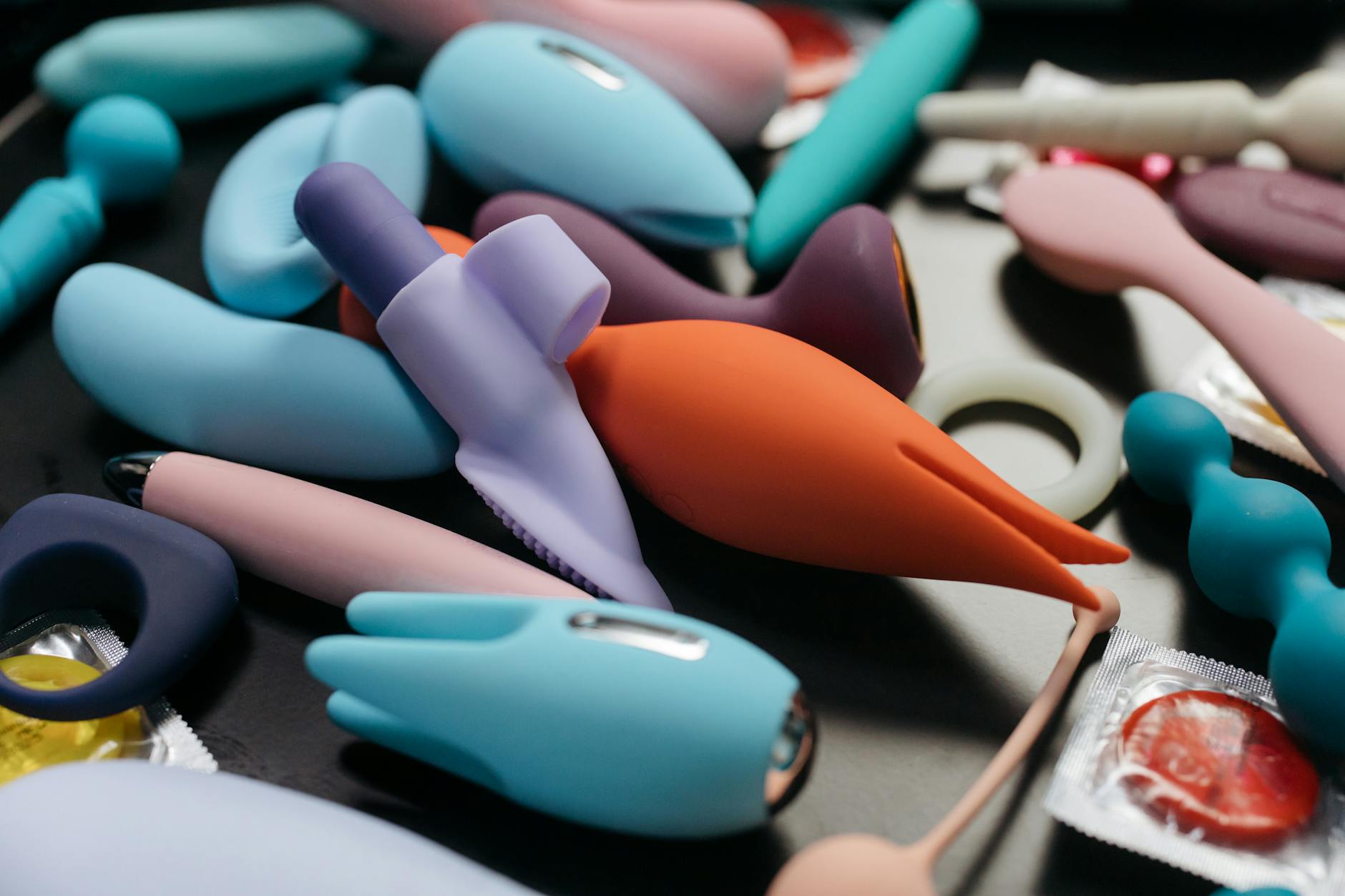
Birth control changes your body's chemistry. Here's what shifts with your pleasure, what doesn't, and how to recalibrate with a lemon clitoral vibrator.
You start birth control and something shifts. Not always bad. Not always noticeable. But shift happens. Your body chemistry changes, your blood vessels respond differently, your mood lifts or tanks, and somewhere in there, your pleasure changes too. The question nobody wants to ask their doctor is simple: how does this affect my orgasm with a lemon vibrator?
Birth control works by steadying your hormones. Specifically, it suppresses the natural rise and fall of estrogen and progesterone that happens across your cycle. This has real effects on pleasure.
Estrogen makes tissue thicker, boosts blood flow to the vulva, and increases natural lubrication. Progesterone does the opposite. Most birth control flattens this entire swing by keeping hormone levels constant. The result is that your baseline sensitivity stays more stable across the month instead of peaking around ovulation.
Sounds boring. It's not.
For some people, this steadiness means more predictable pleasure. For others, it means the sharp spike of sensation they used to feel is gone. If you were someone who loved the intensity right before your period started, you might notice that specific kind of sensitivity vanishes on hormonal birth control.
Where a lemon vibrator matters is that suction stimulation works differently on a body with steady hormones than on a body cycling naturally. The responsiveness changes. This is fixable, but it's worth understanding first.
Combination pills (estrogen plus progestin) create the biggest hormonal shift. You're essentially keeping a constant dose of hormones running all month. Sensitivity usually changes noticeably within the first two to three cycles.
Progestin-only pills (the mini pill) have a milder effect because they're lower dose. Some people feel almost no change in pleasure.
The hormonal IUD releases a small amount of progestin directly into your system. It typically affects pleasure less than the pill because the dose is localized, but it's still enough to matter for some users.
Non-hormonal methods like the copper IUD, condoms, or barrier methods don't change your body's chemistry at all. If you switched from the pill to a copper IUD and suddenly felt more sensation returning, that's why.
The key: if you're noticing a shift in how a lemon vibrator feels after starting birth control, the hormones are almost certainly part of it.
First, delayed arousal. Your body might take longer to warm up. Where you used to feel responsive within minutes, now it's ten or fifteen. This isn't a problem unless you're treating it like one. Longer foreplay is just longer foreplay. A lemon vibrator handles this fine. Start at intensity level one or two instead of jumping to three. You'll get there.
Second, muted peak sensation. The absolute highest point of pleasure sometimes flattens slightly. Not gone. Flattened. Users describe it as feeling like they're reaching 85% instead of 100%. Again, this is hormonal smoothing doing its job. The solution isn't harder stimulation. It's usually longer stimulation. Spend more time building. Let the sensation accumulate.
Third, lubrication changes. Some birth control pills can reduce natural lubrication. This doesn't mean your body is broken. It means you're using a water-based lube. Full stop. This isn't optional if you're experiencing dryness. A slippery surface makes clitoral stimulation feel safer and more pleasurable.
Not everyone experiences a dip. Some people actually feel more pleasure.
Here's why. If your cycle used to include anxiety, cramping, or hormonal mood swings, birth control might have eliminated those. A calmer nervous system can mean more sensation, not less. You're not spending mental energy on pain or worry. That frees up bandwidth for pleasure.
Also, some people's tissue actually responds better to steady hormones. If you had thinner tissue or dryness during the luteal phase of your cycle, the steady approach of birth control might mean you feel more consistent sensitivity all month.
There's no universal rule here. Your body might surprise you.
Let's talk practical. You've started birth control. You notice your lemon clitoral vibrator doesn't hit the same way. Here's what to adjust.
First, extend your warm-up time by five to ten minutes. This isn't because something's wrong with you. It's because steady hormones mean arousal builds differently. Give your body the time it needs.
Second, experiment with intensity patterns. If you used to jump straight to pattern five, try starting at one and building through two, three, and four. You might find the journey matters more now than it did before.
Third, add lubrication intentionally. Use a water-based lube even if you don't feel like you need it. It changes how the suction sensation feels on a body with altered lubrication. The difference is noticeable within seconds.
Fourth, pay attention to your pill timing. If you're on a 21-day pill pack with seven inactive days, your sensitivity might shift slightly during that week. Track it for two or three cycles. You might notice your sweet spot for pleasure shifts depending on where you are in your pack.
Here's where I see people get stuck. They start birth control. Their pleasure changes. They assume it's permanent and spiral. It's not permanent. It's adaptive.
Your body is recalibrating. This takes time. Most people find their new baseline within three to six cycles. Some adjust faster. Some take longer.
The mental block is convincing yourself something's wrong. Nothing's wrong. Your hormones shifted. Your pleasure shifted with them. That's how bodies work.
Lower the stakes. Instead of "I need to orgasm," try "I'm exploring what this feels like now." That mindset shift alone changes the experience. You'll feel more, relax more, and usually finish faster.
If you've been on your current method for six months and your pleasure hasn't bounced back, or if it's noticeably worse than before, it's worth talking to your doctor.
You might not be a combination pill person. The mini pill might work better. Or you might be a copper IUD person. Everyone's different. The goal is finding contraception that works for your whole life, not just pregnancy prevention.
Don't suffer quietly thinking you have to accept a dimmed sex drive. You don't. There are options. It takes some trial and error, but it's worth it.
Birth control changes how your body feels. Using a lemon vibrator with birth control means understanding those changes and working with them, not against them. Longer warm-ups, intentional lubrication, and patience usually solve it. And if they don't, you have options. Your pleasure matters. Treat it that way.
Most people notice a shift within the first two or three cycles. This is when your body has had enough time to adjust to the new hormone levels. For some, the change is immediate. For others, it takes a full pack cycle to feel the difference. Track it across three months before deciding if something feels off. Your body is still calibrating.
Absolutely. Different contraceptive methods affect pleasure differently. If the combination pill dulled your sensation significantly, the mini pill or a copper IUD might feel better. Talk to your gynecologist about your concerns. Be specific. They can help you find something that works for your pleasure as well as your contraceptive needs.
Yes. Water-based lubricant is not optional if you're experiencing reduced natural lubrication from birth control. It makes clitoral stimulation feel safer and more pleasurable. Apply it generously before using your lemon clitoral vibrator. Reapply if you're going for longer sessions. This is one of the easiest fixes.
Usually, yes. When you stop hormonal contraception, your cycle restarts and your body's natural hormonal rhythm returns. Most people feel their baseline pleasure return within one to three cycles. That said, hormonal changes aren't the only reason pleasure might shift. Stress, relationship changes, and mental health matter too. If you stop birth control and your pleasure doesn't return, those other factors might be worth exploring.
Completely. Birth control doesn't interact with silicone toys. Use your lemon vibrator exactly as you would without birth control. The only adjustment is to your technique, not the toy itself. Water-based lube, extended warm-up time, patience. You're fine.
Yes. Your partner deserves to know your body is recalibrating. This isn't about blame or shame. It's about working together. If you need longer foreplay or different stimulation, say that. If you want to explore solo with your lemon vibrator to figure out what feels good now, say that too. Honesty here makes everything better.