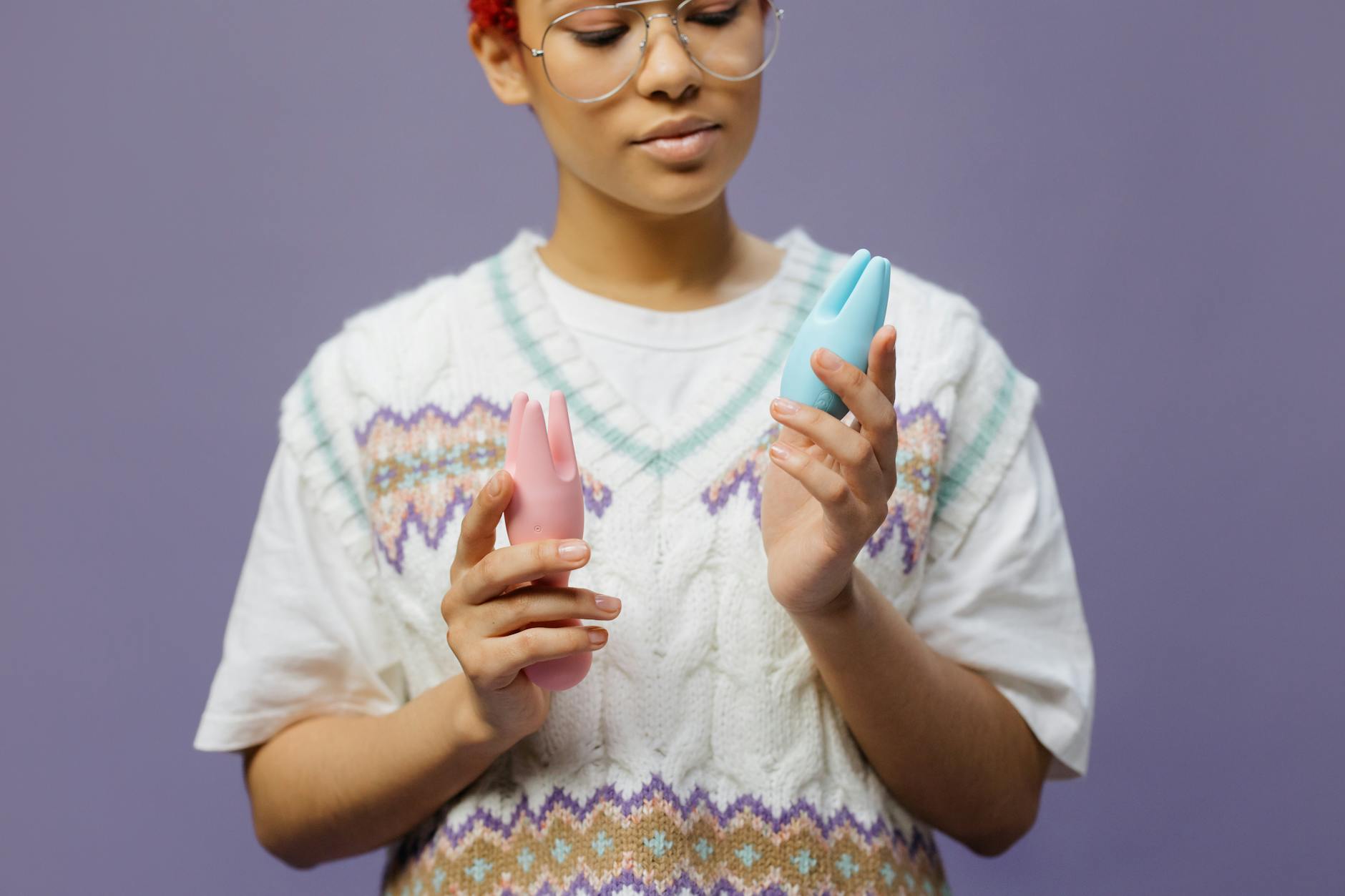
When solo pleasure and partnered intimacy stop speaking to each other
Here's the thing about disconnection: it doesn't usually arrive all at once. You don't wake up one day unable to feel anything with a partner. Instead, it creeps in quietly. You notice that solo touch feels good, maybe really good, but the moment someone else is in the room, the sensation shifts. Or the opposite happens: partnered intimacy feels fine in the abstract, but when you try to access that same pleasure alone, nothing lands.
This split is more common than you'd think, and it's not a sign that something is broken. It's a sign that pleasure and intimacy have gotten tangled in different ways for you. A lemon vibrator can help untangle them.
What actually happens when pleasure goes offline during partnered touch
When solo sensation feels separate from partnered intimacy, a few things are usually happening at once. First, there's often a performance component still running in the background. Even in long-term partnerships, even with people we love, the nervous system can stay in a low-level alert mode: "Am I doing this right? Is this taking too long? What does my partner want right now?" That constant background question drains sensation.
Second, the physical touch of another person sometimes activates different neural pathways than self-touch does. Self-touch is slower, more exploratory, fully under your control. Partner touch often has an inherent rhythm and pressure that may or may not align with what your body actually needs to feel good.
Third, and this matters in relationships with real emotional history, trust can be complicated. You can love someone and still carry a low-level guardedness around vulnerability. Pleasure requires dropping your guard. When that guard is serving a protective function in the relationship, pleasure gets blocked.
None of this means the relationship is failing. It means the pleasure circuitry and the intimacy circuitry need to be recalibrated together.
Why a lemon clitoral vibrator works as a reconnection tool
A lemon vibrator does something specific: it lets you feel pleasure in isolation, with full agency, before you bring that sensation back into partnered space. That's not selfish. That's how your nervous system actually learns to drop its defenses.
When you use a lemon clitoral vibrator solo, you're not trying to orgasm quickly. You're not performing. You're re-establishing a conversation between your body and sensation. The suction stimulation from a lemon toy works particularly well for this because it's continuous and even. There's no guesswork, no adjusting for someone else's rhythm. Just you and your own pleasure.
That sensory clarity matters. Over time, your nervous system learns that pleasure is available to you. That you can feel it. That it's yours. Then, when you bring a partner back into that space, you're not trying to manufacture something new. You're inviting them into something you already know is real.
The four-step pathway from solo back to partnered sensation
Step one is establishing the baseline. Spend a few sessions with your lemon vibrator exploring purely for sensation, not for outcome. Try different settings. Notice what pattern feels good on different days. This is boring, methodical work. It's also foundational. You're building a sensory vocabulary again.
Step two is adding breath and presence. Once you know the basic settings that feel good, slow down more. Don't rush to climax. Instead, practice feeling the sensation while staying connected to your breath and your body. This is where the nervous system starts to relax. Pleasure becomes something you're experiencing, not something you're chasing.
Step three is the bridge moment. Tell your partner what you've been discovering about your own pleasure. Not in a heavy conversation, just matter-of-factly: "I've realized that I feel good with this kind of stimulation at this pace." You're not asking them to replicate the vibrator. You're sharing information about your own body. That data becomes useful for both of you.
Step four is re-entry with agency. When you and your partner connect physically, bring what you've learned about your own pleasure. This might mean using your lemon vibrator during partnered touch, which is completely normal and often works better than either of you expected. It might mean guiding them toward the kind of pressure and pace that actually feels good. Either way, you're not disconnected from your own sensation anymore. You're bringing yourself to the interaction, not trying to find yourself within it.
Each of these steps usually takes a few weeks. This is not a fast process, and that slowness is the point. You're rebuilding trust in your own body.
The conversation you probably need to have
Before you use a lemon vibrator in partnered space, most couples benefit from a simple conversation. Not "I need this to feel pleasure with you" which sounds like a complaint. Instead, something like: "I want to explore sensation more intentionally, and I'd like us to try something together." You're framing it as exploration, not as problem-solving.
Then actually show them. Let them see how the lemon vibrator works. Let them understand that it's not a replacement for them. It's a tool that helps your nervous system relax, which actually makes partnered touch better. Most partners find this clarifying. They realize the disconnection wasn't about them being inadequate. It was about a nervous system that needed recalibration.
What often surprises couples is that adding a lemon clitoral vibrator to partnered intimacy doesn't make it feel less connected. It does the opposite. When you're fully present in your own sensation, you're actually more available to your partner.
When to give this more time, and when to seek help
If you're working through this alone first, give yourself three to four weeks of regular exploration with your lemon vibrator before you worry that nothing is shifting. Nervous systems are slow. Pleasure is slow. Patience is the actual mechanism.
If you've been trying this for a month and still feel completely shut down, or if the disconnection feels tied to deeper relationship concerns, a therapist who specializes in couples work can help. Sometimes disconnected pleasure is a symptom of other relationship strain. Sometimes it's neurological. Both are worth exploring with professional support.
But in most cases, this pathway works. Your body doesn't forget how to feel pleasure. It just needs permission, safety, and time to remember.
FAQ
Can using a lemon vibrator alone actually help partnered intimacy?
Yes, because solo pleasure and partnered pleasure use overlapping but not identical neural pathways. When you rebuild sensation in a low-stakes solo environment, your nervous system learns that pleasure is available to you. That knowledge transfers. You show up differently in partnered space because you're not desperately trying to find pleasure. You're inviting your partner to join something you already know exists.
What if my partner feels threatened by me using a lemon vibrator?
That reaction usually comes from a misunderstanding about what the vibrator does. Most partners worry it means they're not enough. What actually helps is showing them that the lemon vibrator helps you feel more available, not less. You're not choosing it over them. You're using it to come back online so partnered touch can actually work for both of you. Many couples find that including a lemon clitoral vibrator in partnered intimacy strengthens connection rather than threatening it.
How long does it take to reconnect pleasure and intimacy?
Three to eight weeks is typical if you're working solo first, then bringing a partner into it. Some people feel shifts within two weeks. Others need two months. Nervous systems don't have a standard timeline. What matters is consistency. A few minutes with your lemon vibrator three to four times a week will create more change than sporadic longer sessions.
Should I use my lemon vibrator during partnered sex or only alone?
Both work, but most people benefit from the solo exploration phase first. Once you've re-established your own sensory baseline, bringing a lemon vibrator into partnered touch often feels natural and easy. Some couples use it during foreplay. Others use it during partnered sex itself. There's no rule. What works is whatever lets you stay connected to your own sensation while staying connected to your partner.
What if I feel guilty about pleasure even when using a vibrator alone?
That guilt is real and common, and it usually traces back to older messages about what pleasure is supposed to look like or who deserves it. A lemon vibrator doesn't magically dissolve those beliefs. But using one consistently sends a different message to your nervous system: your pleasure matters. You deserve to feel good. That message, repeated weekly, starts to reprogram older guilt. For some people, working with a therapist on the underlying guilt accelerates the process. For others, the embodied experience of pleasure itself is the healing.
Is it normal for sensation to feel better with a vibrator than with a partner?
Completely normal. Vibration is consistent in a way human touch cannot be. It doesn't get tired or distracted. It doesn't carry the weight of performance. So sensation often feels sharper, cleaner, more intense with a lemon vibrator than with hands alone. That doesn't mean partnered touch is worse. It means partnered touch is different. The intensity of a vibrator and the intimacy of a partner are two different kinds of pleasure. Both have value. Many couples find that using them together creates a third kind of pleasure that's richer than either alone.
The reconnection is yours to make
When pleasure and intimacy have split apart, the pathway back isn't about forcing them together. It's about rebuilding one and then gently inviting the other in. A lemon vibrator gives your nervous system permission to feel good without the weight of connection, performance, or expectation. That permission is where reconnection actually starts. Your body remembers how to feel. Sometimes it just needs to remember in private first.