Let's talk about what performance anxiety actually does
Performance anxiety isn't a character flaw. It's your nervous system doing its job badly. When you're worried about being good enough, lasting long enough, or feeling enough, your body pulls blood away from the genitals and floods your system with cortisol. Arousal dies. Sensation flattens. And the harder you try to fix it, the worse it gets. That's not a failure. That's biology working against you.
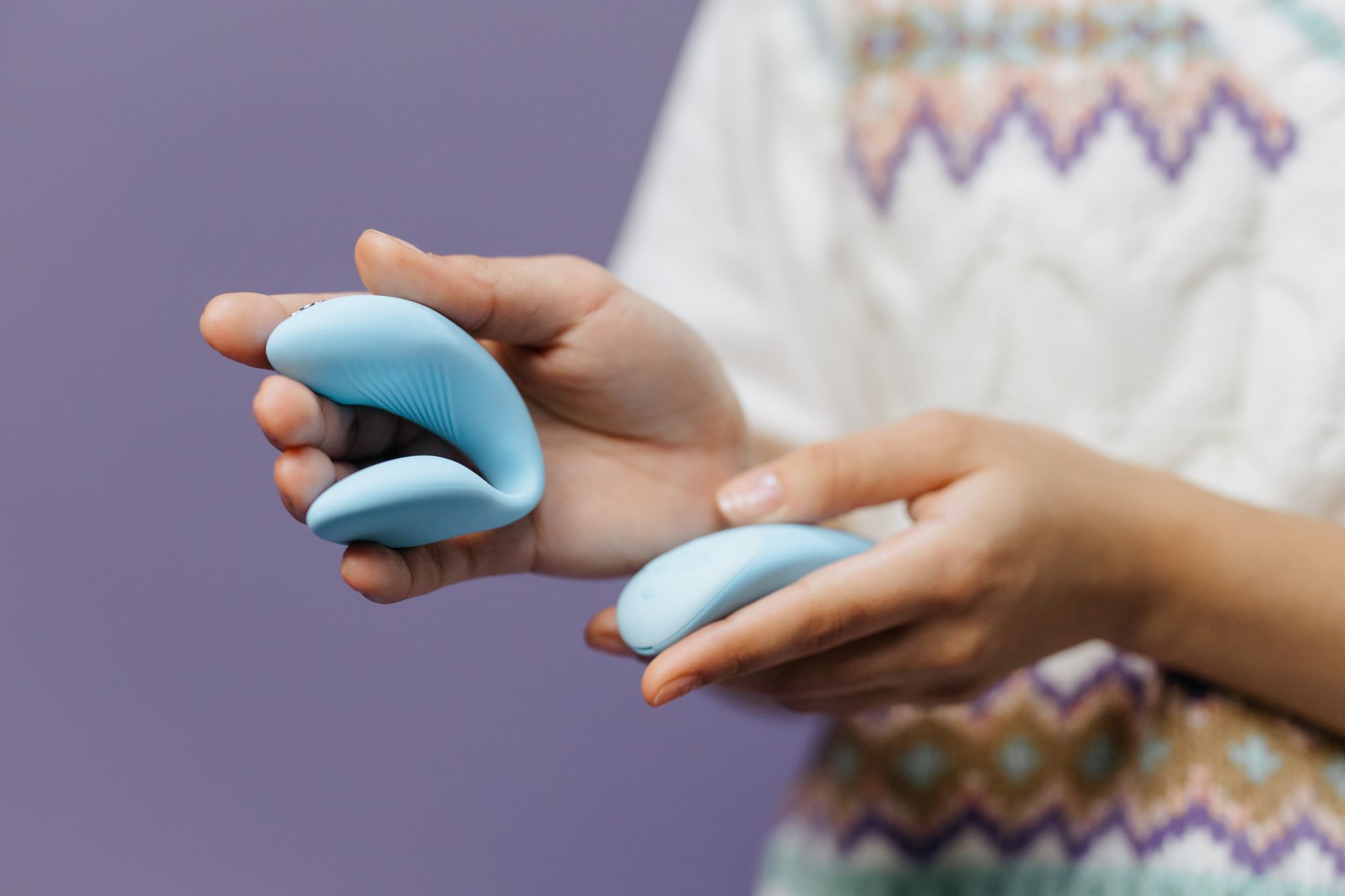
Here's what I've seen in my practice over and over: the moment someone stops performing for a partner and starts prioritizing their own pleasure, everything shifts. A lemon vibrator does something pretty specific for anxiety. It gives your brain permission to stop tracking your partner's experience and start noticing yours.
How anxiety hijacks your arousal system
Your brain has two modes during sex. One is sympathetic (stress, vigilance, performance tracking). The other is parasympathetic (relaxation, sensation, presence). Performance anxiety lives entirely in the sympathetic nervous system. You're monitoring yourself. Judging your body. Worried about duration, orgasm, whether they're enjoying it. Your clitoris needs the parasympathetic system to work well. Without it, even direct touch can feel like nothing.
When you use a lemon vibrator, something unexpected happens. The sensation is strong and specific. Your brain can't ignore it or overthink it. The suction motion of the Lem's design creates a kind of sensory anchor. Suddenly, there's no room in your attention for "Am I taking too long?" or "Is this okay?" because your nervous system is too busy registering pleasure.
I'm not saying vibrators cure anxiety. I'm saying they interrupt the anxiety loop long enough for your body to remember what pleasure actually feels like.
The specific ways vibration breaks the performance trap
Three mechanisms are worth understanding here.
1. Sensation overrides rumination. A strong vibrating sensation is harder to ignore than subtle touch. Your anterior cingulate cortex, the part of your brain that monitors self-performance, gets less oxygen when you're focused on intense localized pleasure. Rumination takes a back seat.
2. You control the intensity. With a partner, you might be moderating your response to match theirs, or hiding sensitivity, or pushing toward an orgasm you're not sure is coming. With a vibrator, you own the whole arc. Lower speeds for gentle warm-up. Higher when you're ready. No negotiation. No performance.
3. Orgasm becomes less fraught. Many people with performance anxiety have trained themselves not to come, or to come in ways that feel safe for their partner. Using a lemon vibrator solo, or even with a partner present, resets that pattern. You learn what actually feels good to you, separate from what you think you should do.
How to use it: the solo practice phase
If anxiety is a real issue for you, start alone. Not because partnered use is off limits, but because your nervous system needs practice in a pressure-free environment first.
Set aside maybe twenty minutes where you won't be interrupted. Phone in another room, door locked, no clock-watching. Start with pattern one or two on the Lem, the gentlest setting. The goal isn't orgasm. It's noticing what happens when you stop trying to feel a certain way and just feel what's actually happening.
Many people with anxiety initially feel nothing, or feel a kind of distant arousal that won't go anywhere. That's normal. Your parasympathetic nervous system has been offline for a while. Give it time. Use the vibrator for five or ten minutes a few times before you expect sensation to translate into arousal.
When you do start to feel something building, resist the urge to chase it. Let it come and go. The goal in these early sessions is teaching your body that pleasure doesn't require perfect conditions or perfect performance. It just requires attention.
Bringing it into partnered sex
This is where things get interesting, and where communication matters a lot. The conversation isn't "I want to use a vibrator instead of having partnered sex." It's "I'm doing some work on anxiety, and I've found that using a vibrator helps my body relax. I'd like us to explore that together."
Some partners are thrilled by this immediately. Others need reassurance that it's not about them. If your partner feels threatened, that's worth addressing separately. A clitoral vibrator isn't a replacement for their touch any more than a book is a replacement for conversation. It's a tool for your nervous system.
Practically, you might use the Lem during foreplay, or during penetrative sex, or as the main event. Some people find that external stimulation from a lemon clitoral vibrator while their partner focuses on other kinds of touch removes the pressure to orgasm from penetration alone. It's especially useful if you've spent years pretending you came when you didn't.
Start with the vibrator during a low-pressure moment. Maybe during oral sex. Maybe during hand play. The idea is introducing it when you both feel relaxed, not during a moment when anxiety is already high.
The timing conversation that actually matters
Here's something nobody tells you: performance anxiety often comes with a specific flavor of impatience. You want to be "ready" quickly because you're anxious about taking too long. This backfires spectacularly.
Using a lemon vibrator gives you permission to slow down. Earlier warm-up, lower initial intensity, longer build time. This isn't about needing more stimulation. It's about your nervous system needing more time to downshift from vigilance into presence.
Talk with your partner about this explicitly. "I'm going to need more warm-up time now." Not because something's wrong with you, but because you're choosing quality of sensation over speed. This reframe matters. It changes the story from "I'm broken" to "I'm being intentional."
What to avoid
Don't use a vibrator as a bandage for a relationship that isn't working. If the performance anxiety is coming from a partner who genuinely makes you feel unsafe or judged, a lemon vibrator won't fix that. It might help you access pleasure despite that, which has value. But it's not a substitute for addressing the actual dynamic.
Don't expect the vibrator to eliminate anxiety entirely in one session. Anxiety rewires your nervous system over time. A vibrator is a tool. It's powerful, but it's not magic. You might need to use it several times a week for a few weeks before you notice a real shift in your baseline anxiety during sex.
Don't assume that if it works solo, it will work the same way partnered. Sometimes it does. Sometimes the presence of another person reactivates the anxiety loop no matter how good the tool is. If that happens, you might need additional support from a therapist who works with sexual anxiety specifically.
When to involve a professional
Performance anxiety that's severe enough to stop you from having sex, or to make sex consistently painful or dissociative, deserves more than a vibrator. It deserves a therapist trained in sex-positive work, ideally someone who knows about cognitive behavioral approaches to sexual anxiety.
A clitoral vibrator like the Lem can be part of that process. But if anxiety is really running your life, you're looking at work that's deeper than sensation alone.
The good news: performance anxiety is one of the most treatable forms of sexual difficulty. Your nervous system didn't forget how to relax. It just needs practice and patience to remember.
The actual game changer
I've watched this happen dozens of times in my practice. Someone comes in convinced they're broken. "I can't come with a partner." "I take forever." "I can't feel anything." Within a few weeks of using a vibrator regularly and learning to separate their pleasure from their partner's approval, that changes.
The vibrator isn't magic because it vibrates. It's powerful because it gives your nervous system explicit permission to prioritize sensation over surveillance. To feel instead of perform. And once your body remembers that, everything else gets easier.
Start with your own pleasure. Alone, without an audience, internal or external. Let yourself learn what actually feels good. Then bring that knowledge into partnership. Your partner doesn't need you to be perfect. They need you to be present. And presence starts with pleasure.