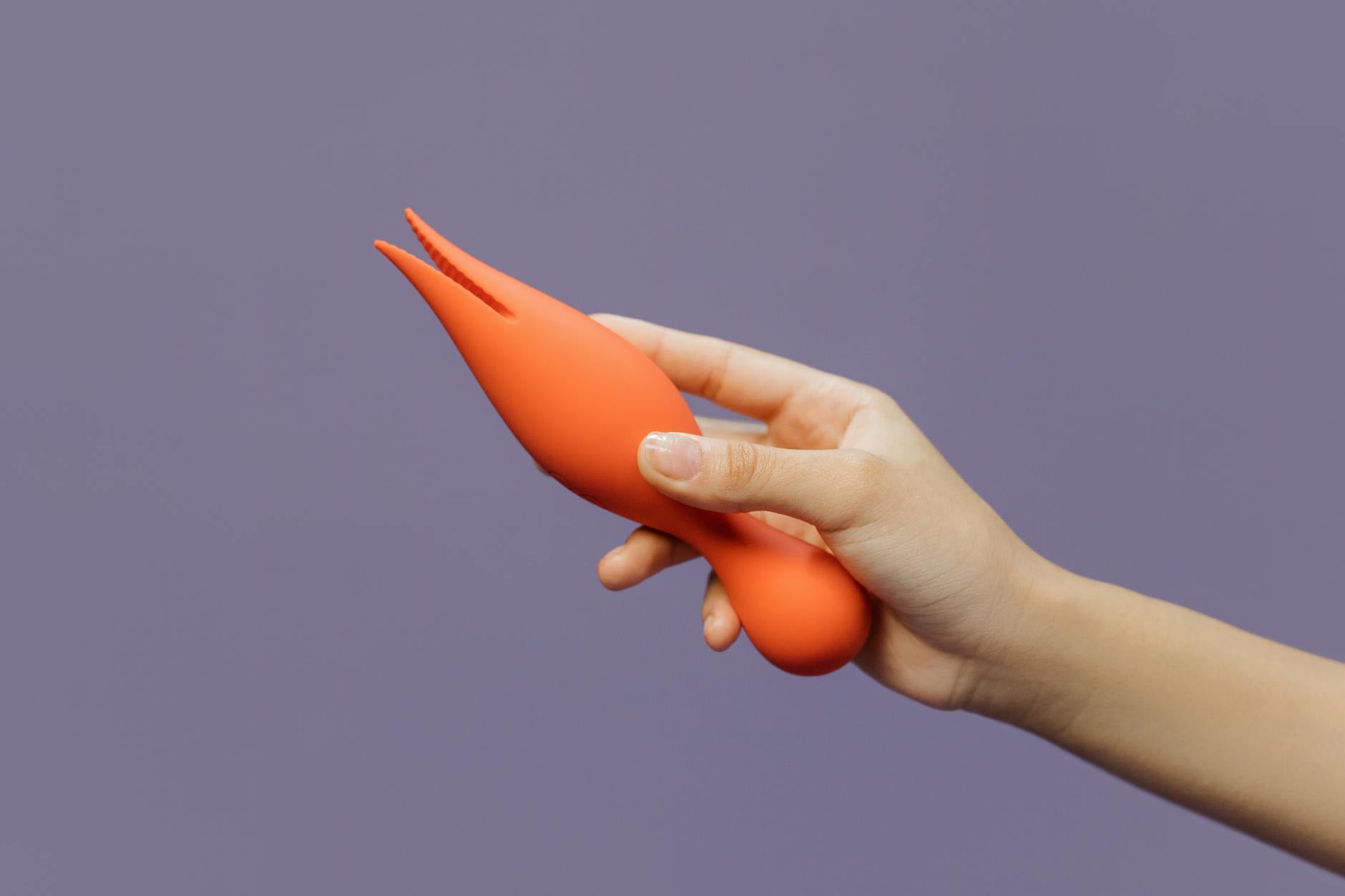
Let's talk about the thing nobody discusses
Introducing a vibrator to a new partner feels like it should be simpler than it is. You own a clitoral vibrator. You know what you like. But the moment someone else enters the picture, suddenly there's shame, weirdness, and about a million questions you didn't expect to have. Here's the thing: a lemon vibrator isn't a problem to solve quietly. It's an opening to build actual trust and understanding early.
I work with couples navigating exactly this situation. The couples who talk about it beforehand are the ones who enjoy it. The ones who bring it out without context, or wait until they're already nervous, tend to create friction where there didn't need to be any.
When is the right time to bring it up
Timing matters more than you'd think. The right moment isn't "right before bed" and it's not "our first time together." It's when conversation feels natural and stakes feel low.
I usually suggest the three-date window. You've had enough time together to know you're actually compatible, but you're not so deep in the early-stage energy that every word feels loaded. Bring it up casually, the way you'd mention any preference. "I use a vibrator when I'm alone, and I really enjoy it. I want you to know that about me" does the whole job in one sentence. No apology. No explanation you don't owe.
If you're already sleeping together and haven't mentioned it yet, the second-best time is after sex, when you're both relaxed and talking. Not during foreplay, not when either of you is vulnerable or turned on. That's when people say yes because they're caught off-guard, not because they actually want to.
What to actually say
Most people overthink this. You don't need a TED talk. You need three things: honesty, curiosity about their thoughts, and zero defensiveness.
Try this: "I want to be upfront about something. I use a lemon vibrator and it's important to my pleasure. I'm wondering how you'd feel about me using it when we're together, or if you'd want to explore that together at some point."
Notice what that does: you've claimed your pleasure as normal (not shameful), you've given them agency (you're asking, not telling), and you've left the door open to multiple answers.
Common responses, and how to handle them:
"That's hot." Great. You're done. Move forward.
"I'm not sure how I feel about that." Perfect answer. Then: "That makes sense. We don't have to do anything right now. I just wanted you to know." Give them space to sit with it. Most discomfort is just unfamiliarity.
"I'd feel replaced." This one's worth a real conversation. Explain that a vibrator is a tool for your pleasure, not a substitute for them. It's the difference between a shower head and a partner. The shower head does one thing. Your partner does everything else. (And if they don't accept that distinction, that tells you something important about how they see your pleasure.)
Why partners actually resist (and what usually shifts them)
Resistance to lemon vibrators in partnered sex usually comes from one of three places, not all of which have anything to do with the vibrator itself.
Insecurity. "If she needs that, it means I'm not enough." This is really about their own sexual identity, not about you or your clitoral vibrator. The antidote is clarity: "You being present and connected is separate from what my body needs to orgasm. Both can be true."
Lack of exposure. They've never seen one up close, never heard a partner talk about one, and it feels foreign. Unfamiliarity reads as threat. Solution: let them watch you use it solo first. No performance, no pressure. Just you, your lemon vibrator, and your partner witnessing that this is normal for you.
Genuine discomfort with the intensity or sound. Some partners find the suction sound of a lemon vibrator unsettling at first, or they're not used to how powerful clitoral stimulation looks. This one just needs time and exposure. The sound becomes background noise after three uses.
How to actually use it together (step by step)
Let's say they're on board. Here's the progression that feels natural and doesn't make anyone weird.
Session one: solo, with them present. You're in bed together, things are heading toward sex, and you say "I'm going to use my lemon vibrator now." Then you do. They're there, they see it, they understand it's part of your pleasure. No commentary needed. If they want to touch you while you're using it, that's fine. If they want to just watch, that's fine too.
Session two: they're involved. They might hold it, or position it, or you guide their hand while you use it. This is where partnership really shows up. You're not just using a tool. You're inviting them into your pleasure.
Session three and beyond: integrate it however feels good. Some couples use it during partnered sex. Some use it during foreplay and then move into other things. There's no rule. The point is that by session three, it's just part of your intimacy vocabulary.
The conversation nobody has (and should)
Here's what I notice most often: people bring a vibrator into partnered sex but never actually talk about what it does for them. You orgasm faster with it, or harder, or in a way you can't quite reach without it. Your partner might assume you're getting more pleasure from the toy than from them. You might assume they're threatened. Neither of you knows what the other is actually thinking.
Instead, have the conversation that matters: "When I use the lemon vibrator with you, I feel more present because I'm not focused on whether I can finish. I'm just enjoying what's happening." Or: "It lets me show you exactly what I like, which is actually hotter for me because you're in control." Whatever's true for you.
Your partner needs to hear that your clitoral vibrator isn't a workaround for their inadequacy. It's a way for you to be fully in your body and fully with them at the same time.
What if they say no, and they're not budging
Sometimes a partner genuinely isn't comfortable with a vibrator, and they won't be. If you've had the conversation, given them space, and they're still firm in their no, you have a choice to make.
You can use it alone, and not in their presence. You can decide it's not a dealbreaker for the relationship. Or you can recognize that incompatibility around pleasure and autonomy is actually a sign of a deeper misalignment.
There's no wrong answer, but there is a dishonest one: pretending to accept their boundary while resenting it, or using the vibrator secretly. Both create distance. If this person is someone you're building toward long-term partnership with, this is worth taking seriously.
Real talk: most partners come around
I've worked with dozens of couples who had initial friction around vibrators. I can count on one hand the ones where it stayed a problem. The reason is simple: once a partner sees that your pleasure is your pleasure (separate from them, not competing with them), something shifts.
Many partners actually find it hot. Many realize that when you're focused on your own sensation, you're more relaxed, which means you're better in bed with them. And many just get used to it, the way you're used to any other part of partnered intimacy.
The vibrator itself isn't the vulnerability. The vulnerability is saying "this is what I need to feel good, and I need you to be okay with that." That's the real conversation. And that conversation, done right, is what creates real closeness.
People also ask
Can I use a lemon vibrator during intercourse with a partner?
Yes. A lemon clitoral vibrator works beautifully during penetrative sex because it targets the clitoris specifically. You can use it during intercourse with a partner, either on your own or let them hold it while you focus on the sensation. It doesn't interfere with penetration, and many people find it deepens their pleasure during partnered sex.
What if my partner wants to use the lemon vibrator on me but I feel self-conscious?
Self-consciousness is normal. Start with lower intensities so it doesn't feel overwhelming, and remember that your partner is probably more focused on your pleasure than on evaluating your body. If you're uncomfortable being watched, you can keep the lights lower or close your eyes. Most of the awkwardness dissolves after the first or second time.
Is it weird to introduce a vibrator early in dating?
No. Introducing a vibrator early actually sets a better foundation because both people get to discuss pleasure openly before patterns get locked in. It signals that you prioritize communication and honesty, which most partners respect.
How do I know if my partner is uncomfortable but just saying they're fine with it?
Watch their behavior over time, not their words in the moment. Do they actually engage with you when you use it, or do they look away? Do they ask questions, or do they stay silent? Real comfort usually includes curiosity. If someone's fine with it, they usually want to understand it better. If they're pretending, they'll often withdraw or make jokes to deflect.
What if I want to use my lemon vibrator during partnered sex but they don't want to be involved?
That's completely fine. You can use your lemon vibrator for your own pleasure while your partner is present. They don't have to hold it or touch it. Some partners are happy to just be nearby while you focus on sensation. The key is that you've discussed it beforehand so nobody's surprised or hurt in the moment.
Does introducing a vibrator change the dynamic of a new relationship?
It can, but usually in a positive way. It opens a conversation about pleasure, autonomy, and communication that most couples avoid for months. That depth, early on, actually builds stronger relationships. Yes, you're being vulnerable. But you're also being honest, and that sets a tone for how you'll handle intimacy long-term.