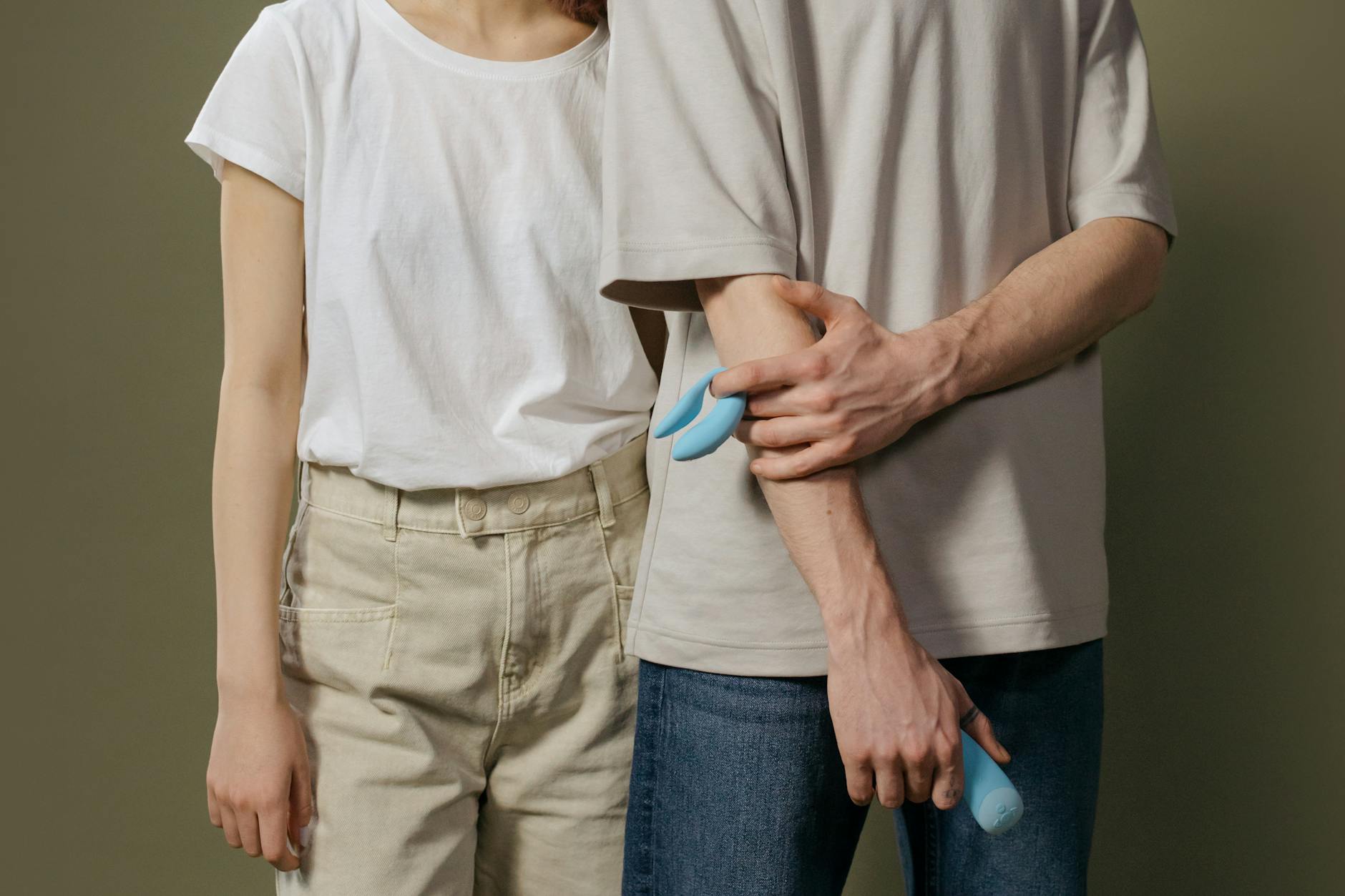
How to Use a Lemon Vibrator When Sensation Feels Numb After Partner Infidelity
Honestly, infidelity does something to your body that most therapists don't talk about clearly enough. It's not just that trust breaks. It's that your nervous system locks down. Your skin feels like it belongs to someone else. Pleasure becomes physically inaccessible. And then everyone around you wants to talk about forgiveness, when what you actually need is to know if you'll ever feel anything again.
I work with a lot of people navigating the space between staying and leaving after infidelity. What surprises them is that sensation loss isn't weakness. It's protection. Your body is doing exactly what it's supposed to do: shutting down access to vulnerability when vulnerability was exploited. The question isn't why you've gone numb. The question is how to gradually, safely invite sensation back when you're ready.
Why numbness happens after betrayal
Let me break down what's actually going on physiologically. When you experience betrayal, your amygdala (the threat-detection center of your brain) goes into overdrive. Your nervous system shifts from the parasympathetic state (rest, digest, pleasure) into sympathetic activation (fight, flight, freeze). In that state, blood flow is redirected away from the skin and toward your core and limbs. Orgasmic capacity literally decreases because your body is in survival mode.
But here's the part that matters for moving forward: this response is reversible. It's not permanent. It's not a sign that you've been damaged beyond repair. It's a sign that your nervous system is doing its job.
The numbness you're feeling is tactical. It's your body's way of saying "I need control. I need to know what's safe." And the deeper layer that most people don't acknowledge is the psychological one: pleasure, for many people, is tethered to trust. When trust evaporates, pleasure can't reach you because somewhere in your mind, pleasure equals vulnerability, and vulnerability feels like the thing that got exploited.
The role of nervous system regulation first
Before you even think about using a lemon vibrator or any clitoral vibrator, you need to know that sensation returns in layers. The first layer is basic nervous system safety.
This means: before penetration, before partnered sex, before any tool, you need to practice feeling safe in your own body again. That's non-negotiable. I recommend my clients start with grounding techniques. Notice your feet on the floor. Feel the weight of your body in the chair. Breathe in for a count of four, hold for four, exhale for six. This isn't woo. It's literally teaching your nervous system that the threat has passed.
Do this for two to four weeks before you try anything sexual, solo or partnered. I know that sounds slow. It is. It's also the only way sensation returns without feeling violating or unsafe.
When you're ready to reconnect with pleasure
Once you've spent some time with nervous system safety, reconnecting with sensation can happen through solo touch first. Not necessarily sexual touch. Just touch. Run water over your hands and notice the temperature. Lie on a soft blanket and notice the texture. This is rewiring the message from your body: touch can be safe. Touch can be neutral. Touch can be yours.
When you're ready to explore sexual sensation again, a tool like the Lem clitoral vibrator can actually be gentler than a hand or a partner's touch, because it removes some of the emotional weight. You're not managing anyone else's response. You're not reading a partner's face or worrying about performance. You're just feeling what your body is telling you.
Start at the lowest setting. Start with external stimulation only, no penetration. Spend time noticing: what does this feel like? Does it feel safe? If it doesn't, stop. That's not failure. That's information. Your body is still communicating its boundaries, and listening to those boundaries is actually the fastest path back to trust in yourself.
The emotional layer: separating bodies
Here's where a lot of people get stuck. They pick up a vibrator, try to use it, and suddenly they're thinking about their partner or the infidelity or what went wrong. The body gets numb again. And then they think the tool doesn't work.
The tool isn't the problem. The entanglement is.
This is where I usually recommend people work with a therapist who specializes in sex and infidelity if they have access. Because sensation doesn't return in isolation. It returns when you've done some of the work to separate your body from the narrative of betrayal. That's not something a vibrator can do alone.
What a vibrator can do is give you evidence. Evidence that your body still has capacity. Evidence that you can feel something other than pain. Evidence that pleasure is still in there, just waiting for permission.
When you're using a lemon sexual toy or any clitoral vibrator in this space, the mindset matters enormously. You're not trying to orgasm. You're not trying to perform recovery. You're noticing. You're collecting data about what your body needs. That's the actual work.
Practical steps with the Lem or a similar clitoral vibrator
If you're ready to move forward with a tool, here's what I recommend:
Start external only. Use the vibrator on the external clitoris first, at the lowest intensity. Many people assume they need to go deeper or harder to feel something. Usually the opposite is true when you're recovering sensation. Light, consistent stimulation is less triggering than intense stimulation.
Set a time boundary. Fifteen minutes, maybe twenty. Not because you need to rush, but because having an endpoint means your nervous system isn't vigilantly waiting for something. It knows when this ends.
Use lube. Water-based lubrication isn't just about comfort. It's about removing friction as a variable. It's about your body feeling cared for. That matters more than you'd think.
Be alone. If you're partnered and you've decided to stay, solo exploration right now is crucial. You need to rediscover sensation without managing anyone else's needs or fears. After you've rebuilt some trust in yourself, partnered use becomes possible. But that comes later.
Expect plateaus. You might feel something the first time and then feel nothing the next time. That's normal. Your nervous system is still recalibrating. Don't interpret a plateau as regression. It's just your body's way of saying "we're going at this pace for a reason."
When to involve a partner again
I get asked this a lot. And my answer is: not until you've rediscovered sensation solo and processed enough of the betrayal that your partner's touch doesn't trigger threat activation.
That doesn't mean the relationship can't heal. It means the healing has to happen in order. Your relationship with your body first. Then your body's relationship with touch in general. Then your body's relationship with your partner's touch.
If and when you involve a partner, a tool like the Lem can actually bridge some of the vulnerability. It's less fraught than genital contact, especially early on. A partner can hold the vibrator, which allows for closeness and control simultaneously. You maintain agency. They maintain connection.
But again, that comes after. Not before.
The grief part that people skip
Let me name the thing most recovery narratives avoid: sometimes sensation doesn't return fully. Sometimes you recover eighty percent, or sixty percent, or ninety-five percent, and there's a grief in that. The body you had before infidelity might not be the body you have after. And that loss is real and deserves acknowledgment.
What I've seen, consistently, is that people often surprise themselves. They expect permanent damage and instead find resilience. But the only way to find out is to move slowly, to listen, and to give yourself permission to stop if something isn't working.
A lemon clitoral vibrator or any sexual toy is a tool. It can help. But it's not magic. The real work is the nervous system recalibration, the grief processing, and the slow rebuilding of trust in yourself first, and then potentially with a partner.
FAQ: Sensation Recovery After Betrayal
How long does it typically take to feel sensation return after infidelity?
There's no standard timeline, honestly. I've worked with people who regain baseline sensation in three to four months, and others who take a year or more. It depends on how deep the betrayal went, whether you're staying in the relationship, whether you're working with a therapist, and your own nervous system's pace. The pressure to recover on someone else's timeline is part of what keeps people stuck, so I recommend releasing that expectation entirely.
Can using a vibrator by myself actually help reconnect with my partner?
Yes, but indirectly. Solo exploration helps you rebuild trust in your own body and your own capacity for pleasure. That self-trust is what allows you to eventually be vulnerable with a partner again. You're not reconnecting with your partner through solo use. You're building the foundation that makes partnered intimacy eventually possible.
What if using a lemon vibrator brings back memories of the infidelity instead of pleasure?
That's actually incredibly common and it's not a sign to stop. It's a sign to slow down. Your brain is processing trauma, and trauma sometimes attaches to neutral cues. If that happens, pause. Ground yourself. Breathe. Then try again a few days later. Over time, the vibrator becomes a new memory marker, not a trauma trigger. But it takes repetition.
Is partnered use of a vibrator okay while we're still rebuilding after infidelity?
It can be, but not immediately. I usually recommend waiting until you've had at least a few months of solo sensation rebuilding. When you do involve a partner, make sure the tool stays in your control. Your partner can hold it, yes. But you decide when it's on, how long it stays on, what intensity. That agency is crucial.
Should I tell my partner I'm using a vibrator to heal from the infidelity?
That's a personal decision, and it depends on your relationship and how far along you are in recovery. Some people find transparency healing. Others need privacy as part of reclaiming their body as their own. Both are valid. But if you're staying in the relationship, eventually that conversation probably needs to happen. It doesn't have to happen immediately, though.
What if sensation still isn't returning and we've waited several months?
That's worth bringing to a trauma-informed therapist or sex therapist. Sometimes numbness is protective in ways that require professional support to shift. Sometimes it's indicative of a deeper decision (like realizing you need to leave). Either way, professional guidance can help you understand what your body is trying to tell you.
Moving forward
Infidelity doesn't define your body's capacity for pleasure forever. What it does is temporarily interrupt it. The path back is slow and it requires patience with yourself that can feel unbearable when you just want to feel okay again. But that slowness is the actual healing.
If you're ready to explore reconnection, whether that's through a lemon clitoral vibrator or just through gradual solo touch, start with safety. Let your nervous system know that this is an experiment in trust, not a test you can fail. Your pleasure matters. Your healing matters. And your pace matters more than anyone else's timeline.
If you need support navigating this or other aspects of your relationship and recovery, reach out. Contact Lem Vibrator Shop to talk through what might work for you.