
Let's be real about what stress does to your body
Prolonged stress doesn't just tire you out mentally. It hijacks your nervous system, floods your body with cortisol, and literally flips the off switch on arousal. You can want sex intellectually, want to feel close to a partner, want to feel like yourself again. And your body just... doesn't cooperate. That disconnect is maddening. It's also completely normal, and it's fixable.
When you're living in chronic stress mode, your body stays in sympathetic overdrive. Your parasympathetic nervous system, the one responsible for rest, recovery, and arousal, gets sidelined. Pleasure requires safety. Safety requires your nervous system to believe the threat has passed. If you're still operating in survival mode, sensation stays muted. Desire stays asleep.
The good news: your nervous system can learn new patterns. And tools like the Lem vibrator aren't just for pleasure. They're literally a way to retrain your body's capacity to feel.
How stress numbs sensation
When cortisol runs high for months, a few things happen physically. Your pelvic floor either gets locked tight (bracing against perceived threat) or goes slack and unresponsive. Blood flow redistributes away from your genitals and toward your limbs, as if your body is ready to run. Your clitoral tissue becomes less sensitive not because it's damaged, but because your nervous system has essentially told it to go quiet.
This is why traditional foreplay might feel pointless. Your brain isn't fully online. Your body isn't responding the way it used to. You might even feel absent during sex, observing yourself from above rather than feeling what's happening.
The neurological piece matters here. Your brain's pleasure centers actually do quiet down under sustained stress. The same areas that light up during arousal get dimmed by chronic cortisol exposure. This isn't depression necessarily, and it isn't about your relationship or your partner. It's neurochemistry.
Why the Lem works differently than manual touch
When you're numb, gentle fingertip contact often feels like nothing. Air-suction clitoral vibrators like the Lem change the equation. The suction pattern creates a specific type of stimulation that reaches deeper nerve tissue without requiring the hypersensitivity that can make numb areas feel worse. It's stimulation without friction overload.
The Lem's pattern also gives your nervous system something very concrete to focus on. When your mind tends to wander during stress recovery, when staying present feels impossible, the gentle rhythmic sensation of a lemon clitoral vibrator anchors you. It demands attention in a way that's neither aggressive nor ignorable. That specificity matters for nervous system retraining.
Another thing: manual stimulation often comes paired with performance pressure if you're with a partner. A vibrator removes that. It's purely about sensation and your own timeline, which is critical when rebuilding after burnout.
Starting over when you feel disconnected
The first rule of using a lemon vibrator after prolonged stress is low expectations. You're not chasing orgasm. You're not trying to get back to "how it used to be." You're introducing sensation back into a body that's been running on empty.
Start with the Lem on its lowest patterns, ideally patterns one and two. Set aside maybe 15 minutes with zero other agenda. Not before bed when you're already exhausted. Not squeezed between other tasks. A time when you can actually rest afterward.
Begin by just holding the vibrator near your clitoris without touching. Notice what you feel, if anything. Some people feel immediate sensation. Others feel almost nothing at first, and that's expected after prolonged stress. Move it gradually closer. Notice temperature, texture, the sound. You're teaching your nervous system that pleasure signals are safe again.
When you do make contact, start with the tip of the vibrator positioned just beside your clitoris, not directly on it. This gives you the benefit of the suction without the intensity of direct contact. Many people find that this side position feels more bearable when sensation is blunted. You're getting stimulation with gentleness built in.
Building the nervous system back online
Repeat this low-intensity session maybe three to five times a week for the first week or two. You're not looking for arousal. You're literally rewiring the pathway between sensation and safety. Each time your body receives stimulation without threat, you're depositing a small vote in favor of "pleasure is possible again."
Some people report that sensation returns gradually, almost imperceptibly. Others notice a sudden shift after a few weeks where the numbness lifts. Both are fine. You're not on a timeline.
Once you're consistently feeling something (warmth, tingling, mild pleasure), you can start to explore slightly higher patterns on the Lem. Maybe pattern three or four. Still nothing painful or aggressive. The goal is incremental pleasure, not maximum intensity.
One thing I hear from clients: arousal sometimes feels weird at first after burnout. It might feel scattered, or localized only in one area, or it might build and then deflate. This is normal. Your nervous system is basically learning a new language. Early attempts are awkward.
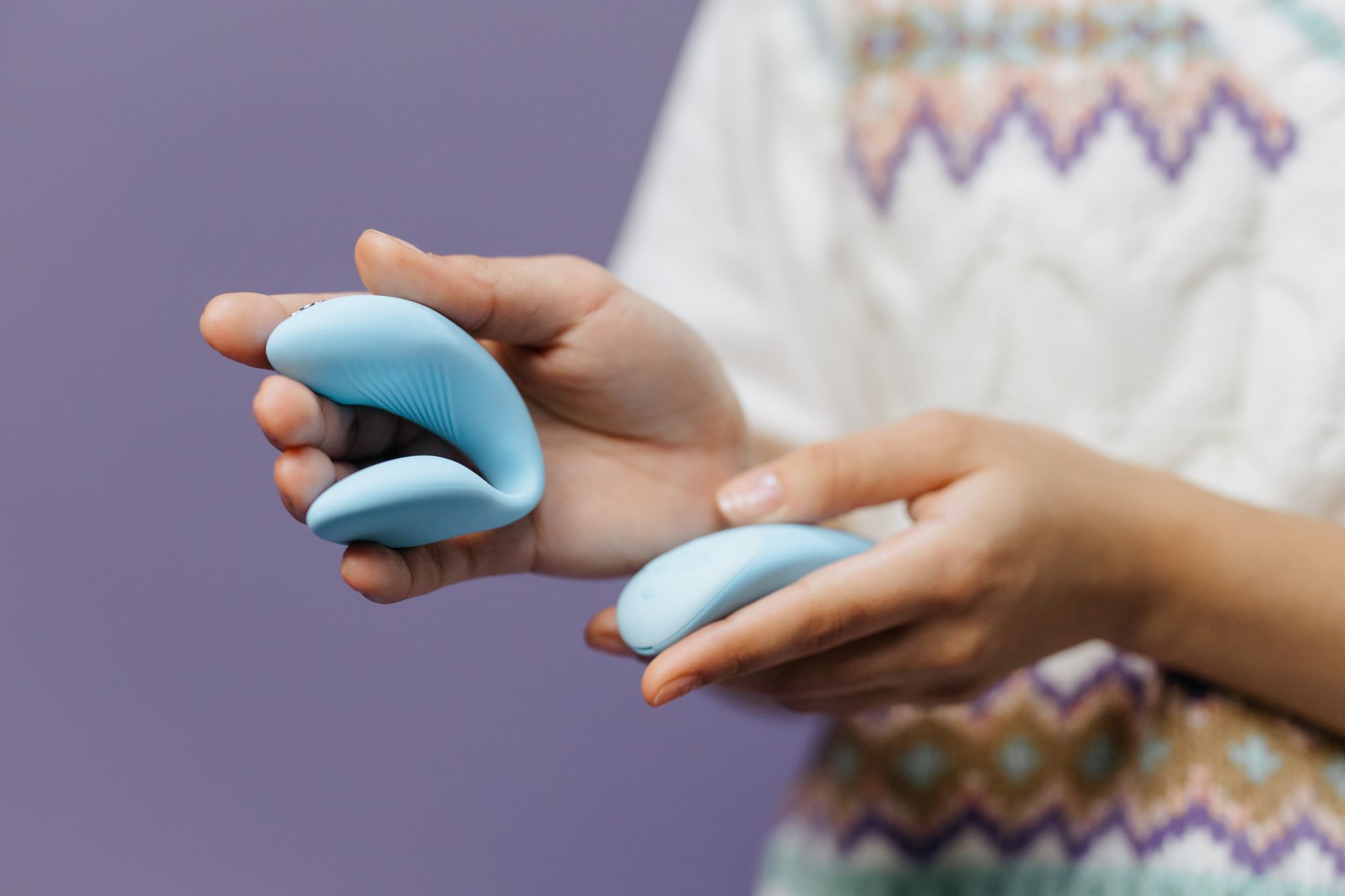
Photo by cottonbro studio on Pexels
What to do if it still feels numb
If after four weeks of consistent use sensation still hasn't returned, a few other variables worth checking. Are you still living in active stress? If your nervous system is still receiving genuine threat signals, pleasure will stay locked down. Sometimes the lemon vibrator alone isn't enough if the stressor is ongoing. That might mean addressing the stress itself, whether that's through therapy, boundary-setting with work, or other life changes.
Also check your medications. Antidepressants, antihistamines, and some blood pressure medications can genuinely reduce sensation. If you started any medications during or after the stress period, that could be part of the picture. Worth discussing with your doctor, but don't stop anything without guidance.
Another piece: alcohol and cannabis can numb sensation even more while you're rebuilding. If you're using either to manage the stress itself, that's a conversation worth having separately. But they will slow your nervous system's ability to rewire.
Finally, sometimes the pelvic floor needs direct attention. When you've been clenching in stress response for months, the muscles can stay locked even after the stress lifts. Working with a pelvic floor physical therapist or using targeted breathing exercises can help unlock that. You're basically waiting for your body to remember how to relax before pleasure can flow.
Bringing a partner back in (if that's in the picture)
If you're rebuilding this in a relationship, the conversation matters more than the tool. Your partner needs to understand that your numbness isn't about them. It's about your nervous system being stuck in protection mode. That distinction removes blame and shame, which are both major pleasure killers.
When you're ready to share the Lem with a partner, you might start by using it on your own while they're present, just to take pressure off partnered touch. Or you might let them hold it while you guide the pattern and intensity. The key is that you're in control of pace and sensation, especially while rebuilding.
Some couples find that watching each other use a lemon clitoral vibrator creates a different kind of intimacy than partnered sex. There's less performance pressure and more genuine curiosity. That can be a bridge back to connection when stress has fractured it.
When pleasure starts returning
Momentum builds. Once you start feeling something, that signal gets louder. Your brain's pleasure centers start lighting up again. You might notice yourself thinking about sensation more often, initiating more, feeling more present in your body generally.
This is where you can gradually increase intensity or experiment with different patterns on the Lem. Maybe you try pattern five or six. Maybe you spend longer with it. Maybe you use it in different positions, which changes how the stimulation feels.
Some people report that their best orgasms after stress recovery are actually deeper and more satisfying than before. This isn't magical thinking. It's what happens when you rebuild pleasure intentionally, with attention, rather than taking it for granted.
Your body has learned something valuable: pleasure is safe. That knowledge doesn't leave.
Frequently asked questions
How long does it typically take to rebuild sensation after prolonged stress?
There's no fixed timeline, but most people report noticeable shifts in sensation within three to eight weeks of consistent low-intensity use. Some feel immediate change, others take longer. Your nervous system rewires at its own pace. The key is consistency, not intensity.
Can I use a lemon vibrator if I'm still experiencing high stress?
Yes, but your progress will likely be slower. Vibrators work best when your nervous system has some capacity to shift into parasympathetic mode. If you're still in acute crisis, addressing the stressor itself is foundational. That said, using the vibrator at lowest intensity can still help. Think of it as planting seeds while the soil is still hard. The work compounds over time.
Does masturbation with a vibrator help if antidepressants are affecting my arousal?
Sometimes. Many people on SSRIs find that clitoral vibrators, especially suction models like the Lem, are more effective than manual stimulation for reaching orgasm. The consistent stimulation pattern can compensate for reduced sensation. If medication side effects are severe, that's a conversation for your prescriber. They might adjust dosage or timing. But adding a tool usually helps in the meantime.
Is it normal to feel emotionally overwhelmed when sensation returns?
Completely normal. After months or years of feeling numb, the return of sensation can bring grief, anger, or unexpected tears. Your body was protecting itself. When that protection lifts, emotions can flood in. This is part of healing, not a sign something's wrong. Give yourself space for it.
Should I tell my partner I'm using a vibrator to rebuild arousal after stress?
That depends on your relationship style and agreements. If you have shared sexual goals, transparency usually helps. You might frame it as "I'm working on reconnecting with my body after burnout, and this tool is helping." That's information, not confession. But if you're in a controlling relationship where sharing feels unsafe, that's a separate and important issue worth exploring with a therapist.
Can the Lem vibrator cause permanent changes to my clitoris if I use it frequently?
No. Clitoral tissue is resilient. Regular vibrator use doesn't cause atrophy or permanent changes. The common worry here is that your body will become "dependent" on the vibrator and won't respond to other touch. That's not how nerves work. The vibrator helps your nervous system remember pleasure is possible. Other forms of stimulation remain available. Many people use vibrators and manual touch interchangeably.
The last piece
Rebuilding pleasure after prolonged stress isn't weakness. It's actually one of the most direct ways to signal to your nervous system that the crisis has passed. Each time you feel something, you're rewiring safety. Each time arousal builds, you're breaking the stress pattern.
The Lem vibrator is just a tool. The real work is the nervous system learning to relax again. But sometimes having a specific, reliable tool makes that learning possible. Your pleasure matters. Your body's capacity to feel pleasure matters. And it will come back.
If you're struggling to rebuild on your own or if stress remains high, talking to a therapist or counselor trained in trauma and nervous system work can accelerate the process. You don't have to do this alone.