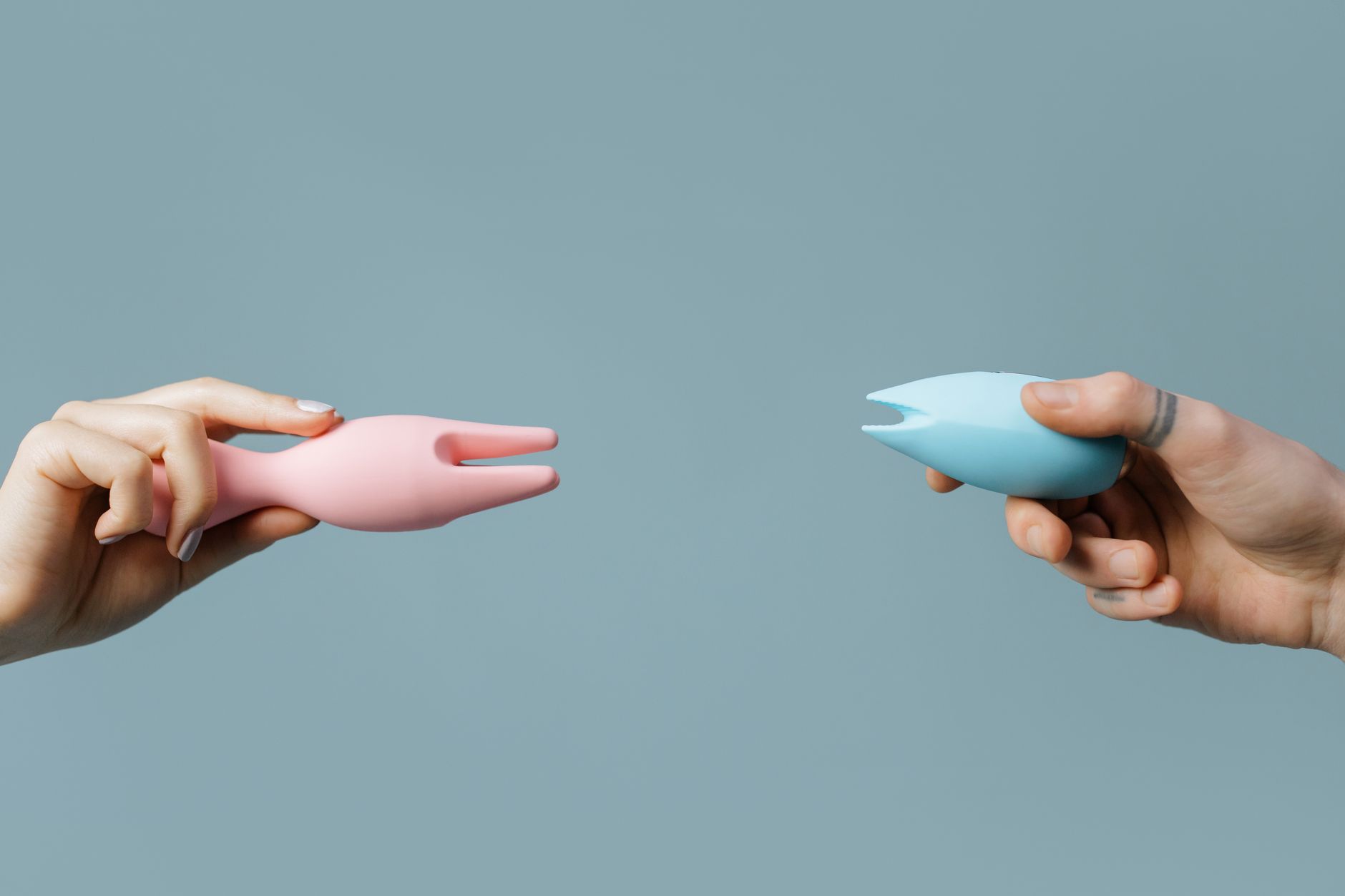
Let's start with the real tension
One of you wants to bring a toy into the bedroom. The other prefers what they've always done—their hands, their rhythm, their control. It feels like opposite preferences, but it's not. It's actually a conversation about trust, vulnerability, and whether new tools feel like additions or replacements. Here's the thing: a lemon vibrator isn't either. It's a conversation starter.
I work with couples on this regularly, and the couples who move through it smoothly all do the same thing. They stop framing it as "toy or no toy" and start framing it as "how can we use this together." That shift changes everything.
Why some partners feel threatened by lemon vibrators
It's not usually about jealousy. It's about narrative. If you've spent years believing your hands are what matters, or that manual stimulation is the real version and toys are a backup plan, then introducing a lemon clitoral vibrator can feel like a referendum on what you've been doing. Your brain spins a story: "If they want this, am I not enough?" That's the actual fear underneath. The toy is just the messenger.
Here's what research actually shows: couples who use toys together report higher satisfaction and lower relationship conflict than couples who don't. Not because toys replace anything. Because they remove pressure. When you're using a lemon sucker or a lem vibrator together, nobody is performing. Both people are exploring sensation, not trying to prove something.
The second reason partners hesitate is control. Manual stimulation feels intuitive because you can feel her response in real time. You adjust pressure and speed based on what you're sensing in her body. A toy can feel foreign because you don't have that same feedback loop. That's fixable, but only if you talk about it first.
How to introduce it without defensiveness
Start before you're in bed. Timing matters wildly here. Bringing up toys mid-foreplay or after a disappointing session reads as "this is a fix." Having the conversation over coffee or a walk reads as "I want to explore something together." Those are different conversations.
Be specific about what you want. Not "I want to try toys" but "I've been curious about lemon vibrators. I read that the way they work is different from other toys. I'm wondering if we could try one together." That specificity does two things. It shows you've thought about this, and it signals that you're not looking for a replacement for them. You're looking for an experience you haven't had yet.
Listen to the actual objection. If they say "I feel like I wouldn't know what I'm doing," that's different from "I think you're not attracted to me anymore." The first is a skills problem. The second is an intimacy problem. Ask questions. What specifically worries them? What would make them feel more comfortable? Some partners just need to hold the toy first, feel how it works, understand the control they still have.
The mechanics of using a lemon vibrator with a partner who loves manual touch
Here's what actually works in practice.
Start with their hands, not the toy. Do what you always do first. Let them build arousal the way they know how. Let them feel in control and connected. Then, after 10 or 15 minutes, introduce the toy. "I want to feel this while you're touching me like that." You're not replacing anything. You're layering. Their hands stay involved. They're just not doing all the stimulation.
Let them hold it sometimes. A lemon clitoral vibrator isn't complicated, but it feels foreign in someone's hands if they've never used one. Suggest they try it on the back of their hand first. Feel the vibration pattern. Then, suggest they use it on you while they're also using their hands. It's not about taking over. It's about them expanding their toolkit.
Communicate your sensation, not your pleasure. Say things like "That pattern makes the sensation feel sharper" or "I like it when you combine the vibration with pressure from your other hand." You're giving them information, not direction. You're teaching them how to read the toy the same way they read your body. That restores their sense of agency.
Use it as a rest tool, not a replacement. Here's something partners don't expect: sometimes, a lemon vibrator means their hands get a break. After 20 minutes of manual stimulation, arms get tired. Hands cramp. A lem vibrator handles sustained stimulation without fatigue. Reframe it that way: "This doesn't mean your touch doesn't work. It means I want to go longer, and this lets us do that."
Reframing pleasure as a team sport
The couples I work with who move through this successfully all report the same shift. Instead of "my pleasure" being a solo project where the partner is an observer, it becomes something you're exploring together. That sounds soft, but it's not. It's the opposite. It's accountability. It's collaboration. It's "your pleasure is so important that I want to understand everything about what feels good."
When a partner who prefers manual stimulation starts using a lemon clitoral vibrator with you, they're not giving up on their hands. They're saying "I trust you enough to experiment. I'm willing to feel uncertain because your pleasure matters more than my comfort with the familiar."
That's actually the intimacy people are looking for when they want toys in the bedroom. It's not the sensation. It's the signal that this is something you're doing together, not something one person wants and the other reluctantly allows.
What to do if resistance stays strong
Sometimes you introduce it gently, and they still say no. That's okay. That's information. The thing to do then is ask why, and listen without defending. "This matters to me. Help me understand what's stopping you." Maybe they had a bad experience with toys. Maybe they grew up in an environment where sex toys were shameful. Maybe they genuinely have zero interest. All of those are real, and all of them deserve respect.
But here's the hard part: if this matters to you and they're not willing to even try, that's worth looking at in a broader conversation about sexual compatibility. Not as a threat. As honest information. Couples who can't negotiate pleasure usually can't negotiate other important things either. If that's you, talking to a couples therapist can help you both understand what's actually driving the resistance.
The conversation after you use it together
After the first time, check in. Not immediately after, but the next day. "What was that like for you?" Listen more than you talk. Some partners discover they actually like it. Some discover it's not their thing but they're glad they tried. Some discover they prefer it combined with manual touch. All of that is useful information that makes the next conversation easier.
The couples who keep toys integrated into their sex life long-term are the ones who keep talking about it. They don't use a lemon sucker once and assume that's the blueprint forever. They check in. They adjust. They stay curious about what works rather than settling into what's always worked.
FAQ
What if my partner thinks toys mean I'm not satisfied with them?
That's the core fear, so address it directly. "I'm satisfied with you. I'm also curious about new sensations. Those aren't the same thing." Pleasure isn't zero-sum. You can love manual stimulation and also want to experience what a lemon clitoral vibrator feels like. Both things can be true. Help them see toys as expansion, not replacement.
Can I use a lemon vibrator while my partner is touching me manually?
Absolutely. In fact, that's often the best entry point for partners who prefer manual touch. They stay involved. They keep their hands in play. The toy just adds another layer of sensation. Some people find the combination of both—hands and vibration—creates sensations neither could produce alone.
How do I choose which lemon sexual toy to start with if my partner is hesitant?
Start small and familiar-looking. A lemon clitoral vibrator is less intimidating than some of the larger or more elaborate designs. Something like the Lem is intuitive. It looks and feels approachable. Your partner is more likely to be willing to try something that doesn't feel alien or extreme.
What if I introduce it and they feel emasculated?
That's worth exploring. Masculinity isn't fragile, but insecurity is real. The conversation here is "Your pleasure in giving me pleasure is important to me. This isn't about what you can or can't do. It's about expanding what we can do together." If they're still struggling after that conversation, there might be deeper stuff worth unpacking, possibly with a therapist.
Should I ask permission before using a lemon vibrator in front of them?
Yes. Absolutely. "I'd like to show you what this feels like" is very different from suddenly introducing it mid-foreplay. Consent isn't just about saying yes or no to sex. It's about feeling prepared and respected. Give them the space to say yes, no, or "maybe later."
Can introducing toys actually improve our sex life if my partner is reluctant?
It can. But only if the reluctance softens into curiosity. If you're forcing it or pressuring them, a lemon adult toy becomes a point of resentment, not connection. The improvement happens when both people are genuinely willing to explore. That willingness takes time sometimes. That's okay.