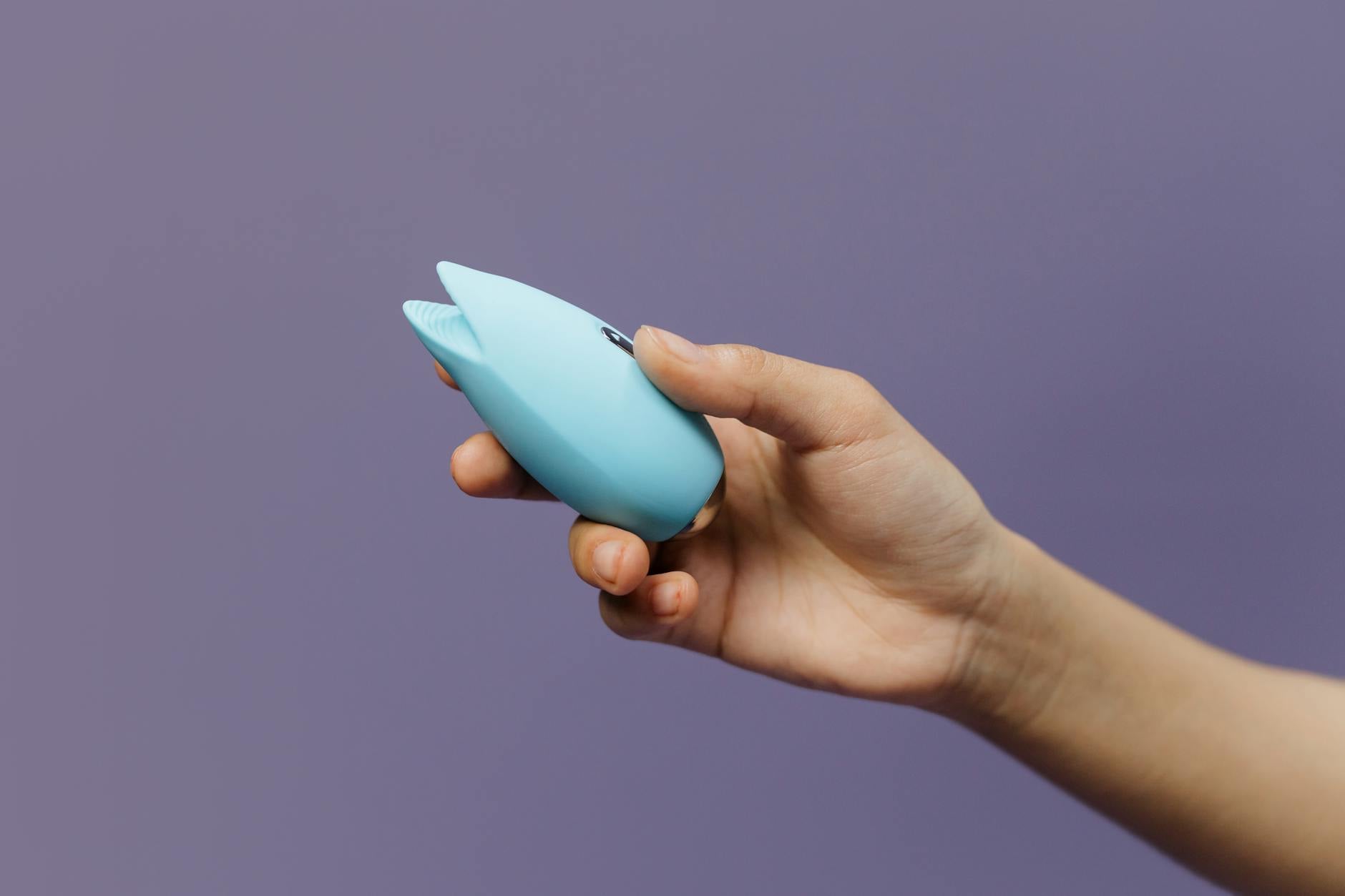
Let's talk about what's actually happening
When depression lifts, your body wakes up in stages. One of those stages is desire. It's not instant, and it's not always linear, but when it arrives, it can feel genuinely confusing because it's been so quiet for so long.
Here's what you're navigating: your nervous system is recalibrating. If you've been on antidepressants that flattened libido (most SSRIs do this to some degree), your brain chemistry is learning how to recognize and respond to pleasure again. That's a real, physical process. And if you're shifting medications or tapering, your body is moving through a second transition simultaneously. Both matter. Both deserve attention.
The good news? This is entirely workable, and a lemon vibrator is actually an ideal tool for this specific moment because of how it works neurologically.
Why lemon vibrators are especially helpful during this transition
Most vibrators rely on friction or sustained vibration. That means your body has to build arousal gradually, and if your nervous system is still resetting, sustained stimulation can feel overwhelming or numb.
Lemon clitoral vibrators use air-suction technology instead. This pattern of stimulation is gentler on a body that's been depleted, and it tends to register faster neurologically. You don't need to be already highly aroused for the sensation to feel good. It meets your body where it is, which matters enormously when you're relearning pleasure after depression.
Second reason: there's zero performance pressure. You're not racing to prove your libido is back. You're just exploring sensation, which is exactly what healing needs.
The first time back: what to expect and how to set yourself up
Forgive yourself if it doesn't feel like you remember. That's not a problem. That's actually information.
Many people notice that after depression (especially longer depressive episodes), sensation feels muted. Your body might respond slower than it used to. Orgasms might feel different. Arousal might spike and dip unpredictably. All of this is temporary and normal. Your nervous system is literally rerouting itself. Give it grace.
Start with these conditions:
Privacy and time. Not five stolen minutes. Twenty to thirty minutes where you're not bracing for interruption. Depression already taught your body to contract. Don't repeat that pattern now. Your nervous system needs to know it's safe to expand.
Physical comfort first. Temperature matters more than you'd expect. A warm room, cozy clothes you can easily remove, no pressure to be in a specific position. Your body is still learning to feel safe. Make it easy.
Lube, always. Even if you don't think you need it. Depression and antidepressants both affect natural lubrication. Water-based lube is your friend. It's not a sign of brokenness. It's a tool that removes friction (literally) so your body can focus on sensation instead of compensating.
Pattern 1 or 2. Don't jump to highest intensity. Your nervous system has been running quiet. Start low. Honestly, you might be surprised how much sensation you feel even at the gentlest setting. That's actually a sign your body is waking up, not that you've lost sensitivity.
What to do if sensation feels numb or distant
This is common, and it has a few different causes.
First, medication overlap: if you've just switched antidepressants or are tapering, some medications create a two to four week window where your brain chemistry is transitioning. Numbness during this window doesn't mean your libido isn't coming back. It means your chemistry is mid-shift. Be patient.
Second, your nervous system still thinks it needs to protect you. Depression lives in your nervous system. Even as your mood lifts, your body takes longer to trust that it's safe to feel. This is where slow, deliberate practice helps. Use your lemon vibrator several times over a few weeks, starting at low intensity. You're not chasing an orgasm. You're teaching your nervous system that sensation equals safety now, not threat.
Third, you might need more warm-up than you did pre-depression. This is completely normal. Your body needs a longer arousal window after extended stress. Spend ten to fifteen minutes with your own touch first. Some people find that mental arousal (reading erotica, watching something that interests them) helps bridge the gap. Do what works for your brain.
If numbness persists after two months of consistent (2-3 times per week) exploration, check in with your prescriber. Sometimes a small medication adjustment helps. This isn't failure. It's information.
Navigating orgasm changes and what they mean
When your body comes back online, orgasms might not feel identical to how they did before. This panics people. It shouldn't.
You might notice: orgasms arrive faster (your body is eager to feel again), they feel less intense initially (your nervous system is still recalibrating), they feel more scattered (pleasurable but diffuse), or orgasms happen but you feel weirdly disconnected from them (your brain and body are still synchronizing).
All of these are temporary. They're stages of relearning, not permanent changes.
What helps: stay curious instead of evaluative. Don't score your orgasms. Notice what you feel without judgment. Does intensity build gradually or arrive suddenly? Do you prefer slower patterns or faster? Does your body feel more present when you're thinking about something or when you're focused on pure sensation? You're gathering data about how your nervous system works right now, in this moment of healing.
The lemon suction sensation works really well here because it tends to create focused, concentrated stimulation that many people find easier to track mentally when they're still reconnecting.
If you have a partner and want to bring them in
This deserves its own conversation. And I mean an actual conversation, not a hint or a hopeful gesture.
Say something like: "My libido is coming back, and I want to explore that. I'd like to take this slowly and I might ask for things to be different than they were before. I need us to check in about what feels good." That sentence does three things. It names what's happening. It sets an expectation of change. It invites partnership instead of performance.
If your partner joins you, they should understand three things clearly:
First, this is about your nervous system healing, not about them. If arousal is slower, that's not about desire for them. If you need more lube, that's not a sign of a problem with your connection. These are physical facts about what depression does to a body.
Second, the goal is exploration, not orgasm. Couples often fall into the trap of "fix her libido" energy, which immediately recreates performance pressure. That's the opposite of what helps. The goal is sensation and presence. Orgasm is optional.
Third, vulnerability is the actual work here. You're asking your partner to witness you rebuilding yourself. That's intimate in a different way than sex is. Lean into that.
The medication conversation with your doctor
If you're on an antidepressant that's still suppressing libido significantly, and your mood has stabilized, ask your prescriber about these options:
Timing adjustment: taking your dose at night instead of morning sometimes helps.
Dose reduction: sometimes a slightly lower dose maintains mood benefits while reducing sexual side effects.
Switching to a different SSRI: some antidepressants have lower libido side effects. Sertraline sometimes works better than paroxetine for this, for example.
Addition of a supporting medication: bupropion, taken alongside your SSRI, often helps restore libido.
These are normal conversations with psychiatry. Your sexual health matters. It's part of overall health. A good prescriber will engage with this.
Rebuilding confidence in your own pleasure
Depression tells you a story about your body: that it's broken, that nothing works, that pleasure isn't for you. Your body didn't forget how to feel pleasure. Your nervous system just got quiet. There's a difference.
Using a lemon vibrator during recovery is an act of defiance, actually. It's you telling your body: I'm still here, I still deserve sensation, I'm still allowed to feel good. And then you prove it to yourself, over and over, until your nervous system believes it.
This is why consistency matters more than intensity. Two times a week at setting 2 is more healing than one desperate session at maximum power. You're training your nervous system to expect safety, pleasure, and presence. That takes repetition.
Your libido is coming back. It might not look exactly like it did before. But what it looks like now, in your body as it is right now, is enough. You're allowed to explore that. You're allowed to feel good. Your pleasure has permission.
People Also Ask
How long does it take for libido to return fully after depression?
It varies widely, but most people see noticeable shifts within four to eight weeks of sustained mood improvement. Full return can take three to six months. If you were on antidepressants, medication changes can add another four to eight weeks to that timeline. The nervous system moves slower than the brain sometimes. Patient, consistent exploration (like using your lemon vibrator regularly) actually helps accelerate this process because you're actively teaching your body that pleasure is safe again.
Can I use a lemon vibrator while I'm still on antidepressants that affect libido?
Completely. In fact, many people find that starting exploration while still on medication is helpful because you're not waiting passively for "normal" to return. You're actively reconnecting with sensation on whatever your current baseline is. Your body will respond better as medication changes happen, but exploration now builds the pathway.
What if orgasms feel really different and it freaks me out?
That's normal anxiety. Your brain is noticing change, and brains don't always like change even when it's positive. The physical sensation you're experiencing is real and legitimate, even if it's different. Give yourself permission to be learning this again. Most people find that orgasm sensation normalizes over two to four weeks of regular exploration. If dramatic changes persist beyond that, check in with your doctor.
Should I tell my partner about exploring with a lemon vibrator during recovery?
That depends on your relationship agreements. If you're partnered and sexuality is shared, yes, that conversation matters. It doesn't have to be detailed. Something like "I'm exploring my body again as things shift with my treatment, and I want you to know that's part of my healing" is enough. If you're single, this is just you and your recovery. No audience required.
Is it normal that I feel guilty about wanting pleasure again?
Yes. Depression tells you that you don't deserve pleasure, that wanting things is selfish, that your body is a problem. That voice doesn't disappear the moment your mood lifts. Guilt about pleasure is a symptom of the depression talking, not truth. Every time you use your lemon vibrator and let yourself feel good without commentary, you're rewiring that lie. That's the work. That's the healing.
What if medication changes happen and my libido shifts again?
Then you adjust. Your body will keep changing as your treatment adjusts. That's not failure. That's healing moving. Keep exploring, keep checking in with your doctor, and keep giving your nervous system permission to feel whatever it feels. The lemon vibrator works across all these stages because it's responsive to whatever your current state is.
Your healing is not linear. Your pleasure doesn't have to be either. You're allowed to find your way back, slowly, with whatever tools feel right. That's enough. You're enough. Your pleasure matters.
If you have questions about navigating recovery or want support thinking through your specific situation, let's talk.