Here's the thing nobody tells you about libido and life changes
Your desire didn't disappear because something is broken in your body. It disappeared because your nervous system is processing something massive. A new job, a move to a different city, a death in the family, a career pivot, a shift in your relationship dynamic. These aren't small. And your body knows it, even when your brain is trying to move forward.
Libido is sensitive to context in ways that most wellness writing completely ignores. You can have perfect hormone levels, a partner you love, and zero medical complications, and still find that desire has just... evaporated. Because your brain is offline. Your safety signals are scrambled. You're operating in survival mode.
The good news: this is temporary, and there are specific ways to rebuild that connection. A lemon clitoral vibrator is one of them.
Why life transitions tank desire (and what's actually happening)
When your external world shifts, your body prioritizes vigilance over pleasure. Psychologically, this makes sense. If you've just moved to a new city, started a demanding job, or faced significant loss, your nervous system is working overtime to create new mental maps, establish new routines, and assess what feels safe in this new landscape.
Desire requires a specific state: safety, presence, and the ability to focus on sensation. Major life transitions throw all three of those out the window. Your prefrontal cortex (the part that handles decision-making and pleasure) gets quieter. Your amygdala (the threat detector) gets louder. You're in protective mode, not receptive mode.
This happens whether or not you're in a relationship. Partnered people often blame their partner or the relationship itself. Solo people often blame their body. Both miss the actual culprit: your nervous system is sorting something significant, and pleasure is on pause while that happens.
What makes this tricky is that the longer pleasure stays on pause, the easier it becomes to stay there. Your nervous system starts to associate your body with stress instead of safety. Then rebuilding desire requires two separate efforts: processing the transition itself, and resensitizing your body to pleasure.
The role of a lemon vibrator in resensitization
Here's why a lemon clitoral vibrator works differently than you might expect during this phase. It's not about force-starting desire. It's about creating a controlled, predictable pleasure signal that your nervous system can trust.
A lemon sucker vibrator uses air-suction technology, which means the stimulation pattern is consistent, gentle, and not dependent on your body's arousal level. You don't have to wait for natural lubrication. You don't have to build toward intensity slowly. The device creates its own rhythm, which means your body can focus on receiving rather than generating.
During life transitions, this matters because your nervous system is already taxed with processing newness. A device that takes away the friction of performance or the pressure to "perform" arousal lets your body relax enough to remember what pleasure actually feels like.
This is the bridge. Not "arousal returns to normal" directly. But rather: "I remember my body can feel good in a controlled, predictable way."
Starting small after a major life change
The mistake most people make when rebuilding pleasure after a life transition is approaching it like a problem to solve quickly. They think, "I'll use the lemon vibrator intensely for 20 minutes and reset my baseline." That usually backfires because it adds pressure to an already-taxed nervous system.
Instead, start micro. Five to ten minutes, low intensity, no expectations of orgasm. The goal is sensory input, not outcome.
Set the scene minimally. You don't need candles or music or a "romantic" environment. You need privacy, a comfortable position, and zero other demands on your attention. Phone on silent. That's it.
Use water-based lubricant even if you don't think you need it. During transition periods, arousal often comes slower, and reduced natural lubrication is common when you're stressed. The lube isn't a sign something is wrong. It's a practical tool that removes friction from the experience.
Start at pattern one or two on the lemon vibrator. The whole point right now is reconnection, not intensity. Your nervous system needs to remember that stimulation can feel safe and good. It doesn't need to be strong to do that.
Building a sustainable pleasure practice during life upheaval
Once you've had a few sessions where your body felt okay receiving sensation, you can start building frequency. Not as pressure. As permission.
Think of this as nervous system retraining, not libido repair. You're telling your body, "Even though external things are chaotic right now, this one thing is safe and predictable and available to you." That message is neurologically powerful.
Try using your lemon adult toy 2-3 times per week. Keep sessions short. Track what patterns feel best, what times of day feel easiest, what positions help you feel most grounded. This data becomes useful later when you're trying to understand your desire patterns more broadly.
Many people find that pleasure returns faster when they're in a low-pressure container like this. You're not trying to get aroused. You're not trying to orgasm. You're just practicing the experience of your body feeling sensation and choosing to extend it. The desire returns naturally when the nervous system feels safe again.
When to involve a partner in this process
If you're in a relationship, this is worth a conversation, but frame it correctly. Don't say, "My libido is broken and I need to fix it." Say, "I'm going through a transition and I'm working on staying connected to my body. I need some space to do that solo for a bit."
Most partners appreciate clarity over mystery. Knowing you're actively doing something to rebuild connection is reassuring. Knowing they have a timeline ("I think I'll be feeling more present in about four weeks") helps them not take it personally.
If your partner is also struggling with the transition, their libido might be affected too. This becomes a moment to align: "We're both adjusting. Let's not pressure each other and give ourselves time." Removing the pressure often allows desire to return faster than forcing it.
Once you're feeling more grounded individually, partnered pleasure often comes back more naturally because the stakes feel lower. You're not trying to fix the relationship or prove you still want them. You're just two people reconnecting in your own time.
Separating real medical issues from transition-related libido drops
That said, sometimes a life transition coincides with an actual medical change. You started a new medication. Your birth control shifted. You're in a new climate that's affecting your sleep. These things matter too.
If your libido hasn't returned at all after 8-12 weeks of the practices above, or if you're experiencing pain, numbness, or other physical changes alongside the desire drop, talk to a doctor. Not because something is definitely wrong, but because ruling it out is smart. Sometimes how to use a lemon vibrator for better sensation after medication side effects is the actual solution. Sometimes it's a combination of things.
The point: don't assume it's all psychological, and don't assume it's all medical. It's usually both, and one doesn't negate the other.
The bigger picture: patience during transitions
Here's what I know from years of working with couples and individuals: desire is resilient. It doesn't disappear permanently just because life got messy. It goes quiet while your nervous system recalibrates. And it comes back when you give it space and a little structured support.
Using a lemon clitoral vibrator during a major life transition isn't about forcing pleasure back. It's about sending your nervous system a signal: "Your body is still safe. Sensation still exists. You can still feel good, even while everything else is changing."
That small, consistent message rebuilds the foundation that libido sits on. Then everything else follows.

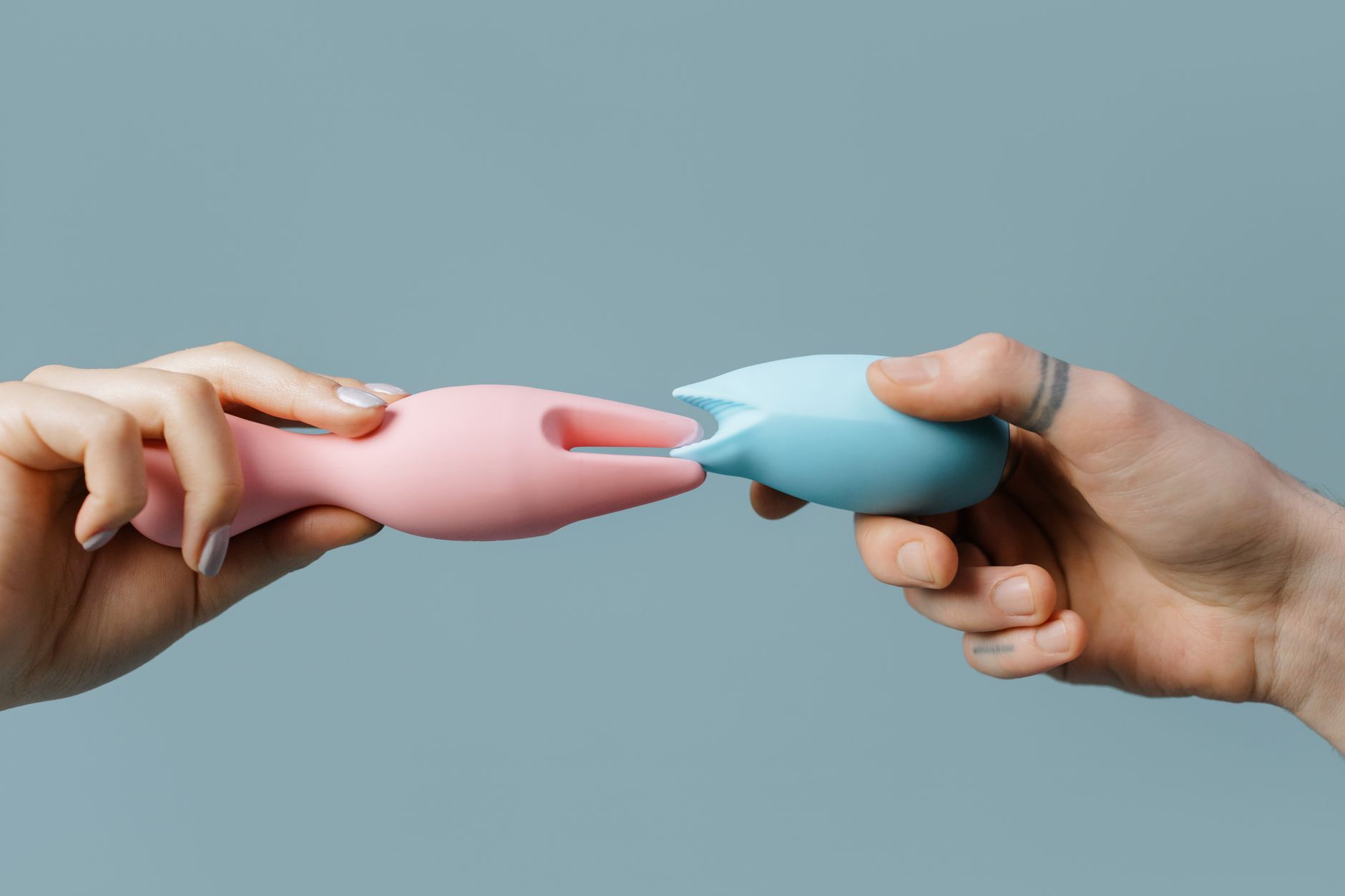
Photo by FounderTips on Pexels
FAQ: Using a Lemon Vibrator When Life Changes Have Killed Your Libido
How long does it usually take for libido to return after a major life change?
It depends on the transition and your nervous system's baseline resilience. Most people see noticeable shifts in 4-8 weeks of consistent practice with reconnection tools like a lemon vibrator. Major transitions like grief, career upheaval, or relocation can take 3-6 months for full restoration. This isn't a failure. It's your body doing exactly what it's supposed to do. The timeline matters less than consistency and self-compassion.
Can using a lemon sexual toy actually help, or is that just distraction?
It's not distraction. It's targeted nervous system input. When you use a lemon sucker device regularly during a stressful period, you're training your body to associate stimulation with safety and pleasure, even when external circumstances feel chaotic. This is a recognized trauma recovery principle. Your body learns that sensation can be good, that you can pause and receive, that pleasure is available to you right now. That's neurologically significant, not just distraction.
What if I feel guilty taking time for pleasure when everything else is falling apart?
That guilt is your nervous system's way of saying, "There's a crisis. Pleasure feels irresponsible." But pleasure during chaos isn't selfish. It's maintenance. Five to ten minutes of reconnecting with your body gives your nervous system a rest break, which actually helps you handle the rest of life better. You're not abandoning your responsibilities. You're refueling so you can show up to them with more resilience.
Should I use the lemon vibrator alone or with my partner during a transition?
Start alone. Your nervous system needs to practice receiving pleasure in a low-stakes, controlled environment. Once you feel more grounded, partnered exploration is great. But rushing that often adds pressure instead of pleasure. Solo sessions rebuild your personal baseline first. Then partnered sessions can happen from a more stable place.
Does using a lem vibrator mean I'm giving up on natural arousal?
Not at all. You're using a tool to rebuild the pathway that stress temporarily blocked. Think of it like physical therapy after an injury. You're not replacing movement forever. You're retraining the system so it can work on its own again. Once your nervous system settles and your life stabilizes, natural arousal typically returns. The device was the bridge, not the destination.
What if I'm worried this is a sign of a deeper relationship problem?
Libido drops during transitions affect solo people, partnered people, people in great relationships, and people in difficult ones. It's not a relationship diagnosis. That said, if your relationship was struggling before the transition, the pressure of the transition might bring that into sharper focus. Use this time to notice: Does your partner make space for you to heal? Do they support your reconnection process? Those answers are useful information. But don't confuse a temporary pleasure drop caused by life chaos with a fundamental incompatibility.
Moving forward
Major life transitions disrupt pleasure. That's not a character flaw or a relationship problem. It's your nervous system being smart and protective. Rebuilding desire during this time isn't complicated, but it does require patience and consistency.
A lemon clitoral vibrator is a useful tool in that process. It gives your body a reliable, predictable pleasure signal while you're processing everything else. It reminds your nervous system that safety and sensation can coexist.
Start small. Show up consistently. Be patient with yourself. Your libido will return. And when it does, it often comes back stronger because you've given yourself permission to prioritize your own pleasure in the middle of chaos.
That's the opposite of selfish. That's resilience.