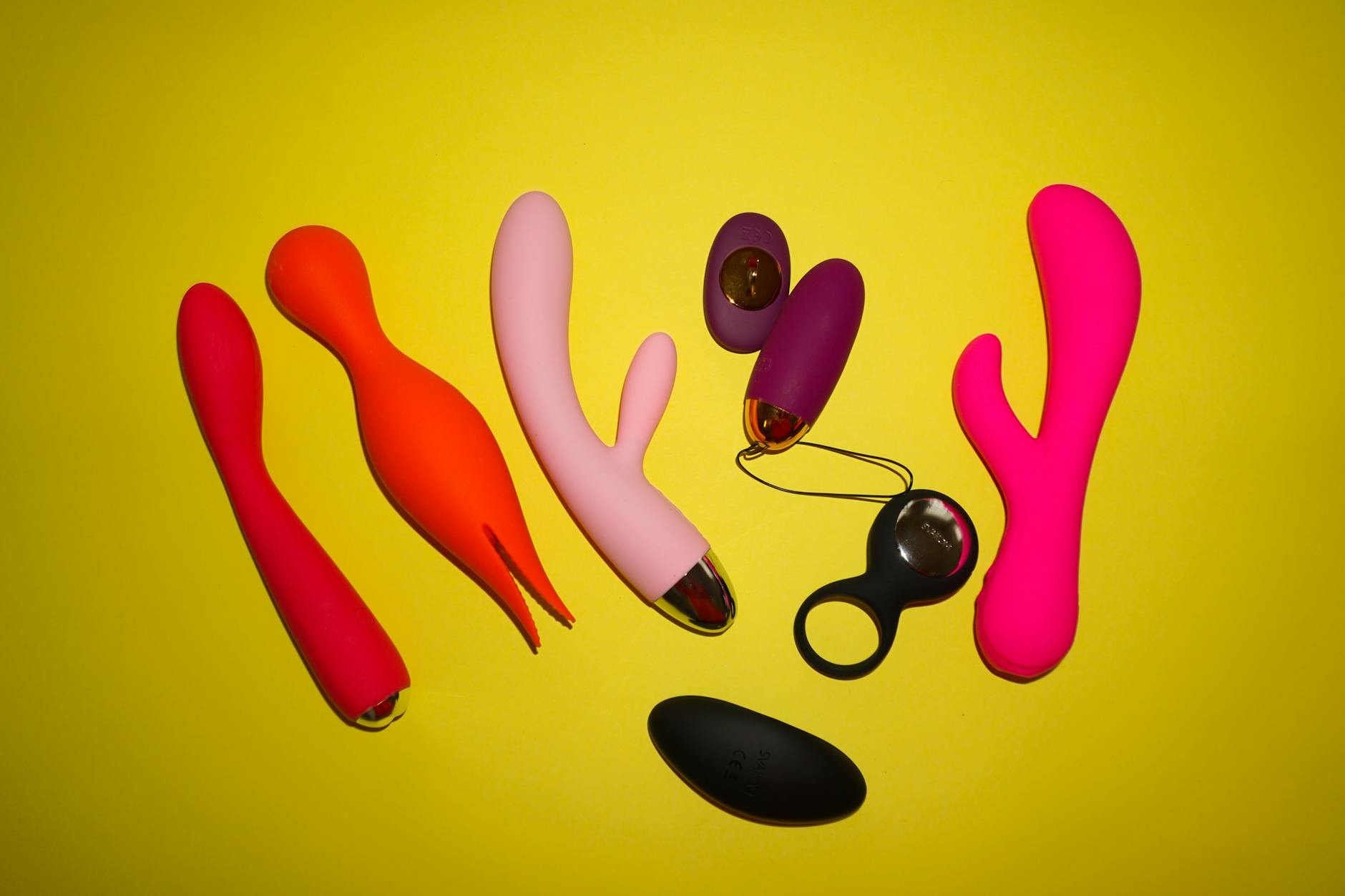
Here's the thing about desire in long-term relationships
Low libido doesn't mean you don't love your partner. It doesn't mean the relationship is broken. It usually means you've been running on empty for so long that pleasure feels like one more thing on the to-do list instead of an escape from it.
After 5, 10, or 20 years together, desire shifts. The novelty fades. Life gets heavy. Kids, work stress, caregiving for aging parents, financial pressure. Your brain is exhausted before your body even has a chance to feel aroused. And somewhere in that exhaustion, you've stopped touching yourself, stopped exploring what actually feels good, stopped asking yourself what you want. Instead, you're asking whether you should want it.
That's where a lemon vibrator comes in. Not as a bandaid. As a tool to remind your nervous system what pleasure feels like when there's zero pressure.
Why low libido feels different in long-term partnerships
Short-term desire is driven by novelty and uncertainty. Your brain floods with dopamine just from not knowing what's going to happen next. Long-term desire, by contrast, has to be built on something steadier. Anticipation. Play. Knowing yourself well enough to ask for what you want.
Most people don't build that. They assume desire should just keep happening the way it did at the beginning. When it doesn't, they blame themselves, blame their partner, or blame the relationship.
But here's what research actually shows: couples who maintain desire over decades are the ones who deliberately create space for pleasure. They've usually figured out a few things:
First, they stopped waiting for spontaneous desire to appear. Responsive desire (desire that builds once you're already engaged in touch) is actually more common than spontaneous desire, especially after years together.
Second, they figured out that pleasure without pressure is the only kind that lasts. The moment sex becomes obligatory or performative, desire collapses.
Third, they learned that personal pleasure (solo or partnered) is the foundation for partnered pleasure. You can't give what you don't know how to feel.
A lemon clitoral vibrator becomes useful precisely at this point. It's a tool for rebuilding your relationship with your own body in a low-pressure way.
How to start using a lemon vibrator when desire is low
The instinct when libido dips is usually to push harder. More date nights. More sexy lingerie. More effort. That almost always backfires because it layers more pressure onto an already depleted system.
Instead, start smaller. Here's the approach I recommend:
Week one: solo exploration, zero expectations. Set aside 15 minutes when you're genuinely alone and you have time to relax without checking the clock. This isn't about reaching orgasm. It's about noticing what sensations your body actually enjoys. Start with the lemon vibrator on the lowest setting. Experiment with different patterns. Notice what makes you curious versus what feels boring or irritating.
Most people who've experienced a libido dip haven't actually felt their own body's pleasure in years. This week is just about remembering that you can.
Week two: add breathing and curiosity. Same solo setup, but this time pay attention to your breath. Notice when you naturally hold your breath and practice breathing out as you apply stimulation. Breath restriction is one of the biggest pleasure blockers in long-term relationships because anxiety tightens everything.
Continue experimenting with the lemon vibrator at different intensities. You're teaching your nervous system that pleasure is safe and available.
Week three: notice the shift. By week three, most people report that they start spontaneously thinking about pleasure during the day. That's not because the vibrator is magic. It's because you've given your brain and body permission to prioritize feeling good. That permission is the actual catalyst.
Rebuilding desire with your partner present
Once you've spent a few weeks reconnecting with solo pleasure, you have options for including your partner. But this part requires communication that most couples haven't practiced.
Don't just spring it on them mid-sex. Have a conversation outside the bedroom when you're both calm. You might say something like: "I've realized I haven't been taking time for myself or my own pleasure in a really long time. I want to change that, and I think it'll actually help us. I'm experimenting with some things solo first, and I wanted you to know that's what's happening."
Most partners respond well to this because it frames it as self-care and reconnection, not rejection.
If your partner wants to be involved, you can invite them to watch or simply be present while you explore. Some couples find it's incredibly hot to see their partner engaged with their own pleasure. Others find it's useful to use the lemon vibrator together as foreplay without pressure to then have penetrative sex.
The key: you're rebuilding desire, not performing it. That's a fundamental shift.
What changes when you prioritize your own pleasure first
Here's what I see happen in my therapy practice when someone commits to a few weeks of solo exploration with a tool like a lemon vibrator:
Desire doesn't always come back in the same form. Sometimes it returns stronger. Sometimes it becomes more selective or more specific. That's all normal and actually useful information.
Your baseline stress drops. When you're regularly experiencing pleasure, your nervous system's threat response decreases. You're less reactive. More patient. That affects everything in the relationship, not just sex.
You develop an actual opinion about what you like. This sounds obvious, but most people in long-term relationships have outsourced their pleasure preferences to their partner's preferences or to what they think they should want. Spending time with your own body using a lemon clitoral vibrator forces you to develop an actual taste.
You become more resourceful. A low-libido spiral often includes learned helplessness. You've tried to initiate and been rejected. You've tried to feel sexy and failed. After a few weeks of solo success, that narrative shifts.
Your partner notices. Even if they don't know the specific mechanics of what you're doing, partners usually sense when someone has shifted from depleted to resourced. That shift is magnetic.
Common obstacles and how to move through them
"I feel guilty taking time for myself when the relationship is struggling." This is backward. Your relationship improves when you're resourced, not when you're depleted. Solo pleasure is maintenance. It's preventive care.
"I don't know if I remember what I like." That's the whole point of spending a few weeks exploring. You're not supposed to know yet. The lemon vibrator is how you find out.
"My partner might feel threatened." Maybe. That's a conversation worth having. If your partner is threatened by you experiencing your own pleasure, that's actually important information about what else might be stuck in the relationship. That might warrant a session with a couples therapist who can help you both navigate the insecurity.
"It's been so long, I don't know if I still want sex at all." That's possible. And it's also not something you can know while you're in a depleted state. You need to rebuild your capacity to feel pleasure before you can know if you actually want more of it.
Why this works better than waiting or forcing it
Low libido in long-term relationships is often framed as a problem to solve. It's not. It's a symptom. Usually a symptom that you've lost touch with your own pleasure, or that the relationship dynamic has shifted in a way that doesn't feel safe anymore.
A lemon vibrator won't fix a relationship that's fundamentally broken. But it will help you figure out whether the relationship is actually broken or whether you're just disconnected from yourself.
Using a lemon clitoral vibrator solo, consistently, for a few weeks does something important. It proves to your nervous system that pleasure is possible. That proof is the foundation for everything else.
People also ask
How often should I use a lemon vibrator if I'm trying to rebuild desire?
Start with 2 to 3 times per week for 15 minutes. You're not chasing orgasm. You're building a new relationship with your body. Consistency matters more than intensity. Once you've been at it for a few weeks and pleasure starts to feel normal again, you can use it as often as feels good, which might be daily or might be a few times a week.
Should I tell my partner I'm using a lemon vibrator?
That depends on your relationship and communication patterns. If you have a foundation of honesty, yes. A simple conversation outside the bedroom works. "I'm taking some time for myself and my own pleasure because I think it'll help us both." If you're in a relationship where that conversation feels unsafe or would escalate conflict, that's important information too, and it might warrant professional support.
Can a lemon vibrator help if the real problem is my relationship?
A lemon vibrator can help you clarify what the real problem is. If you've been disconnected from your body and your own pleasure, you might not be able to tell whether your low desire is about the relationship or about your own depletion. Once you rebuild your sense of pleasure solo, you'll have better clarity. If the relationship itself is the issue, at least you'll know it's not because you've lost your capacity for desire.
How long before I notice a shift in my desire?
Some people notice a shift within 2 to 3 weeks. Others take 6 to 8 weeks. It depends on how disconnected you've been and what else is happening in your life. The most important metric isn't desire. It's whether you start to feel more resourced and less anxious. Desire usually follows.
Is it normal to feel weird about using a lemon clitoral vibrator when you've been with the same person for years?
Completely normal. You might feel like it's a replacement for your partner or like you're being disloyal. You're not. You're rebuilding your capacity for pleasure so you actually have something to bring back to the relationship. That's the opposite of disloyalty.
What if my partner wants to be involved but I'm not ready?
Set a boundary. "I'm starting solo because I need to rebuild my own sense of pleasure first. Once I feel more connected to my body, we can talk about involving you." A patient partner will respect this. An impatient one will push, and that's useful information about whether this relationship has space for you to take care of yourself.
The foundation for long-term desire is always personal first
You can't build partnered pleasure on top of personal depletion. It doesn't work. The couples who maintain genuine desire over decades are almost always the ones who've kept some form of personal pleasure practice alive, whether that's solo exploration, masturbation, fantasy, or something else.
A lemon vibrator is just the tool. The real work is giving yourself permission to matter. To feel good. To take up space in your own relationship with your own body.
If you're experiencing low libido in a long-term partnership and you're not sure how to rebuild, start there. Solo. Curious. No pressure. That's where real desire gets rebuilt.
If you're stuck somewhere deeper in this pattern and you're not sure where to start, reach out. Sometimes the low libido is actually pointing to something that needs a conversation or even professional support. Either way, you deserve to feel good again.