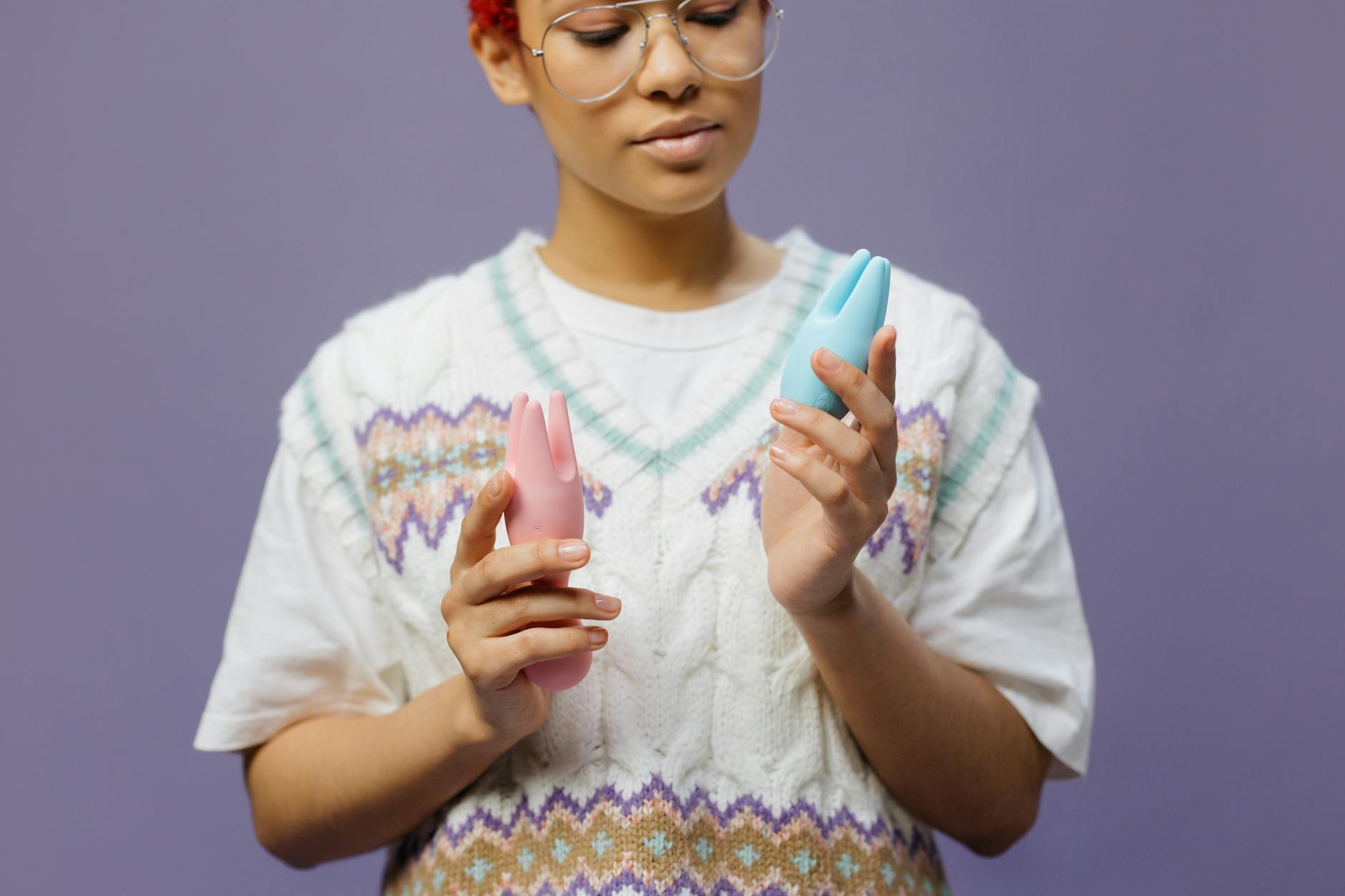
How to Use a Lemon Vibrator for Better Sensation When Antidepressants Reduce Arousal
Let's be real: antidepressants save lives. They also often tank your sex drive. SSRIs in particular (sertraline, paroxetine, fluoxetine) are famous for this. You go from wanting sex to feeling like you're watching pleasure happen to someone else. And when arousal finally builds, orgasm either takes forever or stops showing up entirely.
You're not broken. Your brain chemistry shifted. And if you're weighing "feeling better mentally" against "having a sex life," that's not actually a choice anyone should have to make.
Here's what I know from working with couples navigating this: a lemon clitoral vibrator works differently than your hand or a partner's touch. It bypasses some of the neurological dampening that antidepressants create. This isn't magic, and it's not a substitute for talking to your doctor. But it's a genuine tool that helps most people reclaim sensation even while staying on medication that's keeping them well.
Why antidepressants affect arousal in the first place
Antidepressants work by changing how your brain handles serotonin. Higher serotonin helps mood. But here's the catch: the same brain chemistry that lifts depression also mutes sexual response. Serotonin and dopamine have an inverse relationship when it comes to arousal. More of one, less of the other.
SSRIs in particular hit arousal from three angles. First, they delay or prevent orgasm by affecting the nerves in your genitals. Second, they reduce genital sensation, which means less direct feedback to your brain about stimulation. Third, they lower desire itself. Not all at once for everyone, but usually some combination of all three.
The weirdest part: you might still have intrusive sexual thoughts, or want sex intellectually, but your body won't cooperate. Your genitals feel kind of numb. Arousal takes 45 minutes instead of 10. And then orgasm either happens in slow motion or doesn't happen at all.
This affects about 40-60% of people on SSRIs. If it's you, you're in the majority. And it's worth knowing: different SSRIs hit differently. Paroxetine is notorious for this. Sertraline is slightly better. Bupropion actually helps libido. So medication choice matters, but that's a conversation with your doctor, not something a lemon vibrator changes.
How a lemon vibrator works around antidepressant numbness
A lemon clitoral vibrator applies sustained, consistent stimulation in a way that hand or partner stimulation can't quite match. Here's why that matters when you're on antidepressants: reduced sensation means you need higher intensity input for your nervous system to register "this is pleasure."
Your hand gets tired. A partner can't maintain perfect rhythm for 30 minutes. A lemon vibrator doesn't. It's relentless in the best way.
The suction action of a lemon vibrator is particularly useful here. Instead of friction, which can feel irritating on already-numb tissue, suction stimulates the nerve endings in your clitoris directly. It's like the difference between tapping on glass and tapping on a drum. One travels through the glass. One resonates.
For people on antidepressants, this makes a real difference. You're not asking your numbed-down sensory system to detect whisper-soft touch. You're giving it a signal strong enough that even dampened nervous system notices.
The practical setup that actually works
Start by accepting that "normal" arousal might not happen right now. This is important. Don't wait for spontaneous desire to build. That's asking for something the antidepressant is actively suppressing. Instead, schedule it. Block 30-45 minutes. Tell your partner you're taking care of yourself if that feels relevant.
Clear your space of distractions. Phone away. Nothing on the TV in the background. Your brain's arousal system is already working harder than it should be. Don't make it compete.
Then actually do something that usually feels good, even if desire hasn't shown up yet. Read something hot. Look at images that land for you. Watch something. Let your brain do some of the lifting that your body isn't doing automatically right now.
This isn't cheating or a cop-out. Antidepressants have altered your wiring. You're working with your actual neurochemistry, not fighting it.
Setting the lemon vibrator for antidepressant-dampened sensation
Start lower than you think you need. Most people on antidepressants eventually want higher intensity, but the path to that involves calibration.
Settings 1-3 on the Lem give you a chance to warm up. Use these for 5-10 minutes. You're not chasing orgasm yet. You're waking up sensation. You're telling your nervous system "we're doing this now."
Then move to 4-6. Stay here for 10-15 minutes. This is where most people find their actual arousal starts to build. It's not spontaneous desire. It's responsive. Your body is answering the stimulation.
If you hit a plateau around setting 6 or 7, sit there for a while. Antidepressants often create this weird effect where you get close to orgasm but can't quite break through. This is incredibly frustrating. The fix is patience and time, not more intensity. Give it 10-20 minutes at one setting. Sometimes orgasm comes. Sometimes it doesn't. Both are fine.
If nothing happens after 30-40 minutes, stop. This isn't failure. This is information. Your antidepressant dose might be too high. You might need to explore a different medication with your doctor. Or your body might need a different setup entirely. Which is fine.
The mental game nobody talks about
Here's where most people get stuck: antidepressants don't just reduce physical sensation. They also create a mental flatness around pleasure. You might have a lemon clitoral vibrator doing everything right, but your brain feels like you're watching someone else have the experience.
This is called anhedonia when it's extreme. Reduced anhedonia when it's partial. And it's absolutely a side effect of SSRIs. The same serotonin elevation that steadies your mood also numbs the reward circuitry.
The lemon vibrator helps with the physical part. But you have to handle the mental part yourself. That means giving yourself permission to have a smaller, slower, quieter orgasm and call it a win. That means touching yourself while using the vibrator, staying present even when presence feels flat. That means accepting that sex might feel more like a neutral activity right now instead of thrilling.
A partner can help here. Presence matters. Eye contact matters. Being told "this is good, you're okay, we have time" matters. If you're solo, affirmations are corny but useful. "My body works. Pleasure is possible. This is enough."
When to talk to your doctor instead of reaching for a vibrator
A lemon vibrator helps with the sensation problem. But if you're on an antidepressant and your sex life has tanked, you have actual options:
- Dose adjustment. Sometimes lower doses reduce sexual side effects. Your doctor can trial this.
- Medication switch. Bupropion, mirtazapine, and some others are less likely to kill libido. Or adding a second medication that counteracts sexual side effects.
- Timing. Some SSRIs are shorter-acting. Taking them right after sex instead of daily can reduce side effects.
- Adjunct medication. Buspirone, sildenafil, or bupropion can be added to your SSRI specifically to restore sexual function.
None of these are guaranteed. But they're real. And "I'm on an antidepressant so I just have to live with no sex drive" is outdated thinking. Modern psychiatry has tools for this.
The lemon vibrator is a complement to that process. Not a replacement. You might switch medications AND use a lemon clitoral vibrator. You might lower your dose AND discover that the Lem changes everything. Both can be true.
Building a routine when motivation is flat
Antidepressants don't just reduce arousal. They reduce motivation itself. So "just use it more often" isn't realistic advice when your brain is also telling you that nothing matters.
Instead, anchor self-pleasure to something you already do. After your morning shower. Before bed. When your partner initiates anything intimate. On Sunday nights. Tie it to an existing habit and suddenly you're not fighting motivation. You're just following a routine.
Start with twice a week. Not daily. Daily feels like a chore when you're depressed. Twice weekly is manageable. And genuinely, twice weekly with actual attention beats daily half-conscious attempts.
Some people find that the first time is hard, but if they push through to a second session in a week, orgasm gets easier each time. Your nervous system remembers the pathway. So consistency matters more than intensity.
What you might actually feel
Honestly, don't expect transcendence. Antidepressant-dampened pleasure usually feels quieter. Less explosive. More like a small release than a thunderbolt. And that's okay. That's still pleasure. That's still orgasm. It's just a different texture than you might have experienced before you started medication.
Many people describe it as feeling less in their genitals and more sort of... centralized. Almost mental. Which is weird but not bad. Your body is working with what your brain can do right now.
Some people feel tingling. Some feel pressure release. Some feel almost nothing but their body moves in that way. All of these are valid responses. You're not broken. You're medicated. Those are different things.
The honest timeline
Using a lemon vibrator starts to help within a few sessions. But the deeper adjustment, where you stop resenting the flatness and actually accept this as your current normal? That's 2-3 weeks of consistent practice.
Some people cycle off SSRIs eventually and their sex drive roars back. Some stay on them long-term and settle into this quieter version of pleasure. Both are real, and a lemon clitoral vibrator works for both scenarios.
What matters right now is knowing that numbness during sex is a known side effect with known workarounds. You're not imagining it. It's not about your relationship or your attraction. It's pharmaceutical. And pharmaceutical problems have pharmaceutical and mechanical solutions.
People also ask
Can you orgasm while on antidepressants?
Yes. About 40% of people on SSRIs have no sexual side effects at all. Of the 60% who do, most can still orgasm. It just takes longer, feels quieter, or requires more direct stimulation. A lemon vibrator provides that direct stimulation in a way that often helps people reach orgasm even when antidepressants make it harder. It's not guaranteed, but it's common.
Does switching antidepressants help with sexual side effects?
Yes. Different antidepressants have different sexual side effect profiles. SSRIs are the worst. Bupropion and mirtazapine are gentler on libido. Some tricyclic antidepressants are fine. If sexual side effects are genuinely affecting your quality of life, tell your doctor. There are options. It might take a few tries to find the right fit, but "I have to choose between my mental health and my sex life" is false.
Should you use a vibrator while on antidepressants?
Absolutely. There's nothing contraindicated about it. A lemon vibrator doesn't interact with SSRIs. It's just a tool that helps you stimulate yourself more effectively when your nervous system needs stronger input. Many therapists and doctors recommend exactly this.
How long does it take to feel sensation again with a vibrator?
Most people notice a difference within 3-5 uses. Not necessarily orgasm yet, but increased sensation in the clitoris. That's the vibrator teaching your nerve endings to wake up. Consistent use over 2-3 weeks usually leads to more reliable arousal and orgasm. This timeline varies based on your dose, the specific antidepressant, and your individual neurology.
Is low sensation from antidepressants permanent?
No. If you eventually switch medications or lower your dose, sexual sensation usually returns within weeks to a few months. During the time you're on the medication, a lemon clitoral vibrator helps manage the side effect. It's a temporary adaptation to a temporary situation, even if that situation lasts years.
Can you combine antidepressants with sexual performance medications?
Yes, often. Sildenafil or other medications for erectile function can sometimes help restore sensation and arousal even in people with vulvas. Again, this is worth discussing with your doctor. Multiple medications addressing different mechanisms can work together.
What actually matters here
Your mental health comes first. No question. If an antidepressant is keeping you sane and functional, it's the right choice. The sexual side effects are real, but they're manageable. You have options. A lemon vibrator is one option. A different medication is another. Talking to your doctor about it is the actual first step.
Start there. Then pick a tool that works for your body. Your pleasure matters. And it's completely possible to reclaim it even while taking medication that's saving your life. Those two things aren't mutually exclusive. They're just a little more intentional now. That's not a tragedy. That's just reality. And reality is workable.