Let's be real about ADHD and sex
ADHD doesn't just affect your ability to sit still in a meeting. It hijacks your nervous system during sex, too. Your brain gets bored mid-session, sensation stops registering, arousal flattens, and you're left wondering why everyone else seems to have this figured out. Here's the thing: they probably don't. But if you have ADHD, the stakes feel higher because your body literally requires more stimulation, more novelty, and more sustained input to stay engaged.
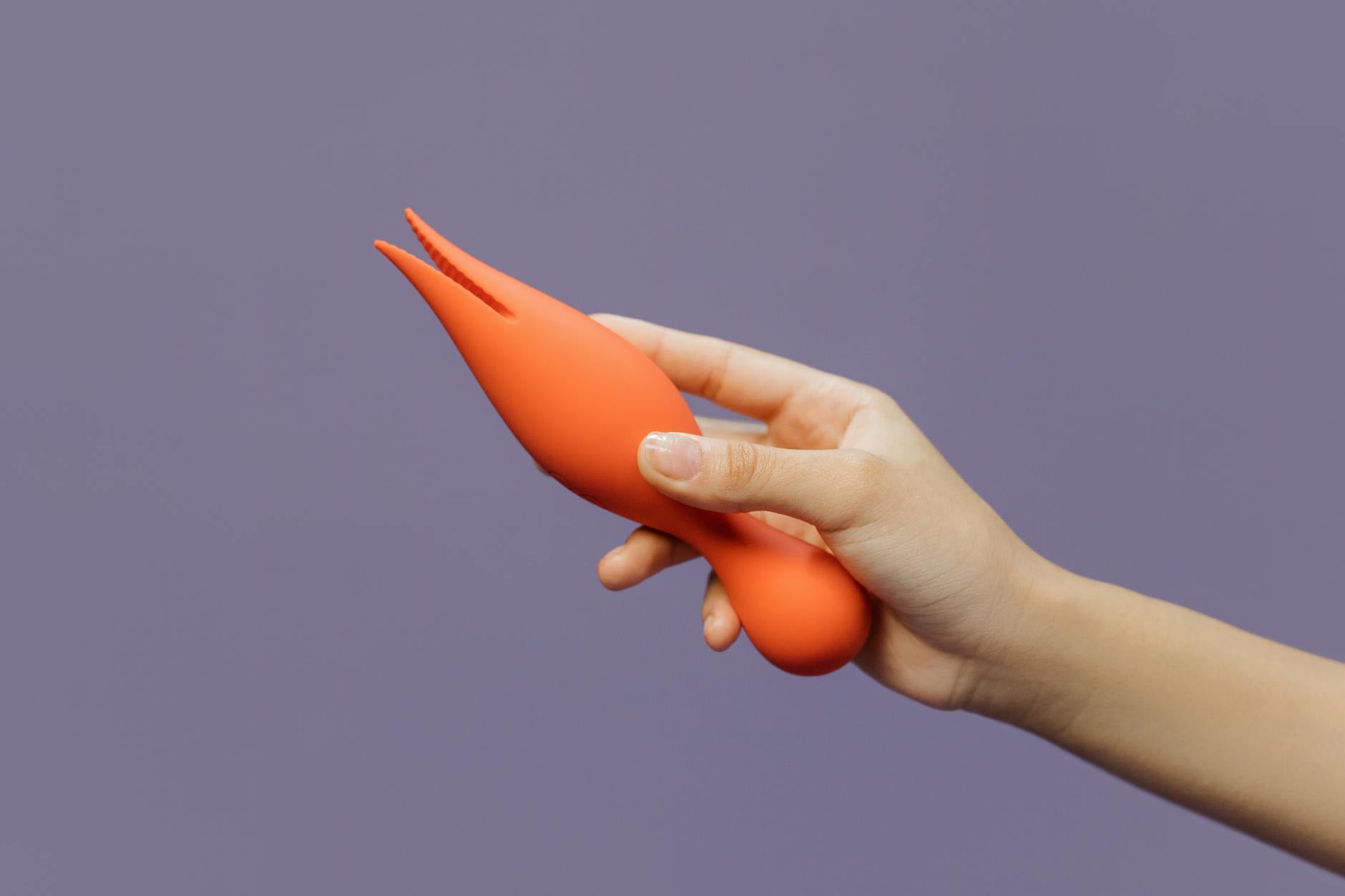
A lemon clitoral vibrator changes the equation. Not because vibrators are magic, but because they provide consistent, intense sensory feedback that your ADHD nervous system actually registers. Let me walk you through exactly how.
How ADHD changes sensation and arousal
ADHD is fundamentally a dopamine regulation issue. Your brain needs more stimulation to feel satisfied, and it needs that stimulation consistently. During sex, this shows up as:
Difficulty sustaining focus. Your mind wanders mid-foreplay. You're thinking about your grocery list, that email you didn't send, or whether the door is locked. It's not about your partner or your desire. It's neurology.
Sensation that fades fast. A partner's touch feels amazing for 30 seconds, then your nervous system adapts and stops registering it. You need novelty and intensity to keep sensation "alive."
Arousal that requires sustained input. You can't just ease into it. You need a chain of sensations, each one intense enough to hold your attention.
Racing thoughts during pleasure. Even when orgasm is close, your brain might spin off into a tangent. Many people with ADHD report losing arousal right before climax because their attention scattered.
The lemon vibrator works for ADHD pleasure precisely because it provides intense, consistent tactile feedback that your dopamine system doesn't easily habituate to. It's variable enough to stay novel and focused enough to be undeniable.
Why intensity matters for ADHD sensation
This is crucial: if you have ADHD, low-to-medium vibration patterns often feel like nothing. You're not broken. Your nervous system simply needs more signal to register input. Many people with ADHD report that they couldn't feel anything with traditional vibrators until they tried a device like the Lem, which provides intense suction-based stimulation instead of simple buzzing.
With suction-based lemon vibrators, you get sustained pressure and release, which creates a chain of sensation. Your brain can't ignore it because the sensation pattern keeps changing. It's stimulating in the truest sense.
Start at intensity levels 4-6 instead of 1-3. You won't desensitize to these levels the same way you would to gentle buzzing. The suction mechanism works differently than conventional vibration.
Vary the pattern every 3-5 minutes. Switch between pulse, steady suction, and pattern modes. This novelty keeps your ADHD brain engaged and prevents adaptation.
Use rhythm changes as a focus tool. When your mind starts wandering, manually shift to a new pattern. This interruption of thought actually refocuses you back on sensation.
Using a lemon vibrator alone when focus is scattered
Solo sessions are where many people with ADHD see the biggest shift. You're not managing another person's rhythm or expectations. You can fully dial in to what keeps your attention.
Set a specific time window. 15-25 minutes. ADHD brains respond well to time-bound activities. Knowing there's an endpoint paradoxically makes it easier to focus within that window.
Remove phone distractions. Put it in another room, not across the room. Out of sight actually works for ADHD because "no temptation" is easier than "will power."
Pair sensation with music or sound. Some people with ADHD find that specific music anchors their attention to sensation. The rhythm keeps your brain from drifting.
Start with high intensity immediately. Don't warm up to it. Go straight to level 5 or 6. Low intensity bores your nervous system into distraction.
If your mind wanders, pause instead of pushing through. Take a breath, notice where your attention went, then restart at a new pattern. Restart counts as novelty for your brain.
When using a lemon vibrator with a partner
This is where ADHD and partnered sex gets tricky. Your partner might feel rejected if you reach for a toy, or they might not understand why intense stimulation matters. Neither is their fault, but both are communication opportunities.
Frame it as collaboration, not substitution. "I need the intensity of this to stay present with you" is different than "I prefer this to your touch." The first is honest. The second (even if true) tanks intimacy.
Use the lemon vibrator as a bridge. They can hold it, apply it at different angles, or bring it in for the final minutes before orgasm. This keeps them involved while you get the sensation your nervous system needs.
Tell them what focus feels like for you. "When I'm using this, I might look intense or quiet. That's not a sign something's wrong. That's me finally being able to concentrate on us." ADHD partners often look "absent" during pleasure because they're actually just arriving at presence.
Build a pattern together. If they understand you shift patterns every few minutes as a focus tool, they can anticipate the rhythm changes and feel like they're part of the sequence, not sidelined.
Many couples find that once the ADHD partner is using the right tool, sex becomes less frustrating for both people. The ADHD partner stops feeling broken, and the other partner stops feeling rejected.
Medication timing and sensation
If you're on ADHD medication, your sensation might fluctuate with the medication cycle. Many people report that their responsiveness peaks mid-afternoon (peak medication effect) and dips in early morning or evening.
Plan sex around medication peaks if you can. If you take stimulant medication, your dopamine sensitivity is highest 2-4 hours after dosing. This is when a lemon vibrator will feel most intense and your focus will be easiest to sustain.
If evening is your only option, expect to need higher intensity. As medication wears off, your sensation threshold rises. You're not losing desire. You're just back to baseline ADHD nervous system demand.
Don't assume medication is "ruining" sensation. Sometimes stimulants improve sexual function because they improve focus and reduce the anxiety that comes with attention-jumping. If sensation feels different, it might just feel different, not worse.
If you're on SSRIs in addition to ADHD medication (a common combination), the sensation change might be the SSRI, not the stimulant. That's a separate conversation with your doctor, but lemon vibrators help offset sexual side effects of SSRIs too, because intensity overrides the desensitization that antidepressants can cause.
Preventing overstimulation and numbness
Here's the paradox: ADHD people need intense stimulation, but intense stimulation for too long causes numbing. Your nervous system adapts faster than people without ADHD realize.
Set a hard stop at 20-25 minutes. If you haven't orgasmed by then, take a 10-minute break. Lie still. Let your nervous system reset. This actually makes the next session more intense.
Use the lower intensity modes for foreplay, if you have a partner. Save levels 5-6 for the final 5-10 minutes. This preserves sensation novelty and prevents adaptation.
If numbness happens mid-session, pause and breathe. Five deep breaths. Then restart at a different pattern. The pattern change plus the pause resets sensation.
Don't mistake flatness for broken. If sensation feels flat after 15 minutes, that's normal nervous system adaptation. It's not a sign the toy is broken or you're broken. It's a signal to vary the input.
Many people with ADHD actually find that their most intense orgasms come after a pause, not during a continuous session. Permission to stop and restart is permission to actually enjoy sex.
When to talk to a therapist about ADHD and pleasure
If you're experiencing complete loss of desire (not just scattered attention), or if sex feels like an obligation you can't escape even with a lemon vibrator, that's worth exploring with a therapist. ADHD and depression often travel together, and low libido can be a sign that something deeper is happening.
A couples therapist (especially one trained in ADHD dynamics) can help you and your partner build a sexual rhythm that works for your nervous system, not against it. Many couples think the problem is desire when the problem is actually rhythm mismatch.
If medication side effects are dampening sensation, talk to your prescriber. There are ADHD medications with different sexual side effect profiles. Sometimes switching helps.
People also ask
Can ADHD medication itself reduce sensation during sex?
Yes, some stimulant medications can slightly reduce sexual response in the short term, though many people report improved sexual function overall because they can focus. SSRIs combined with ADHD meds are more likely to cause noticeable dampening. If this is happening, talk to your prescriber about timing (taking meds earlier in the day) or switching to a medication with a different side effect profile. Stimulants alone usually don't cause lasting sensation loss. If sensation loss persists, it might be depression or anxiety traveling alongside ADHD, not the meds themselves.
Do I need a lemon vibrator specifically for ADHD, or would any clitoral vibrator work?
Suction-based vibrators like the Lem work better for ADHD because they create sustained sensation changes that your nervous system registers longer than simple buzzing. Conventional vibrators often feel like nothing to ADHD brains because the sensation plateaus fast. You can try any vibrator, but if you find a low-intensity one doesn't work, switching to high-intensity suction is usually the answer. Not all bodies are the same, but most people with ADHD who struggle with sensation find suction more effective than buzzing.
Can ADHD hyperfocus make sex better?
Yes, if you can access it. Some people with ADHD can hyperfocus on sex, and those sessions are often intensely pleasurable. The challenge is that hyperfocus isn't reliable. You can't force it. But when it happens, yes, it's often the best sex. A lemon vibrator during those hyperfocus moments can amplify the experience because your brain is already fully engaged.
Is it normal for ADHD people to prefer solo sex to partnered sex?
It can be, because solo sex removes the cognitive load of managing another person's pleasure, timing, and expectations. Partnered sex requires working memory (staying present while managing interaction), and ADHD brains have less available working memory. This doesn't mean you can't have great partnered sex. It means partnered sex might require more setup, communication, and tool use (like a lemon vibrator) to feel manageable. Many ADHD people enjoy both when the conditions are right.
Does ADHD affect orgasm itself, or just arousal?
ADHD mostly affects arousal and focus, but racing thoughts can interrupt orgasm right before it happens. Some people with ADHD describe their orgasms as "smaller" or "less intense," which is often attention-related rather than sensation-related. A lemon vibrator that demands your attention helps because it's hard to think about anything else when something that intense is happening. The orgasm itself usually isn't dampened by ADHD. The path to orgasm is what needs support.
Will I always need a vibrator to have good sex if I have ADHD?
Not necessarily. Many people find that once they understand their nervous system's needs and communicate them to a partner, partnered sex improves. But vibrators are useful tools, not crutches. If a lemon vibrator makes sex better and more consistent, that's a feature, not a limitation. There's no shame in using the right tool for your body.
The bottom line
ADHD doesn't mean you can't have great sex. It means your nervous system has different needs. You need more signal, more novelty, more intensity. A lemon vibrator isn't a workaround for broken desire. It's the right tool for how your brain actually works. Use it without apology. Use it during solo exploration to understand what intensity and rhythm keep you engaged. Use it with a partner once you've figured out your own needs. And if focus is still scattered or pleasure still feels out of reach, reach out to talk through what might help. You deserve sex that actually feels good.
Sources
- Amabella, M., et al. (2021). Attention-Deficit/Hyperactivity Disorder and Sexual Function: A Narrative Review. Sexuality & Disability, 39(1), 45-58.
- Cunningham, K. A., et al. (2019). Sexual Function in Adults With ADHD. Journal of Attention Disorders, 23(14), 1804-1812.
- McComish, R. J., et al. (2018). Dopamine, Desire, and ADHD: Neurochemical Approaches to Sexual Dysfunction. Frontiers in Psychiatry, 9, 567.
- Instanes, J. T., et al. (2016). Adult ADHD and the DSM-5: Background, Getting to Diagnosis, and Clinical Utility. Current Attention Disorders Reports, 8(1), 9-18.