
The gap nobody talks about
You're trying. You're present. Your partner is doing everything right. And yet. Nothing. The sensation just... isn't there. Not pain, not numbness exactly. Just a hollow kind of absence where pleasure used to live. If this sounds like you, you're not broken, and you're absolutely not alone.
Here's what most people don't know: muted or missing clitoral sensation is one of the most fixable sexual issues out there. It's also one of the least discussed. Most advice assumes sensation loss is either a relationship problem ("reconnect with your partner") or a medical one ("see a doctor"). Usually it's neither. It's a nervous system that's been worn down by stress, medication, hormonal shifts, or just plain habit.
The path back is quieter and more practical than you'd expect.
Why sensitivity goes flat
Clitoral sensation doesn't work like a light switch. It's more like a volume knob that gets turned down slowly by a dozen things happening at once. Here's what actually causes it to fade.
Chronic stress and anxiety. Your nervous system has two main modes: a sympathetic mode (fight-or-flight) where sensation dampens as a survival mechanism, and a parasympathetic mode (rest-and-digest) where pleasure is possible. When you're stressed, your body prioritizes threat detection over sensation. It's not a bug. It's a feature that's meant to keep you safe. But when the stress becomes chronic, your nervous system forgets how to switch back.
Medication side effects. Antidepressants, anti-anxiety meds, and even some blood pressure medications can numb sensation by design. They flatten the intensity of everything you feel, which is sometimes exactly what you need for stability. The trade-off is real. But it doesn't mean pleasure is off the table forever. It just means you need a different approach than speed and intensity.
Hormonal shifts. Pregnancy, postpartum transitions, birth control changes, and early perimenopause all alter estrogen and testosterone levels, which directly affects tissue sensitivity and clitoral blood flow. Lower hormone levels don't stop pleasure. They just require a different kind of stimulation to wake things up.
Desensitization from repetitive stimulation. If you've been using the same rhythm, pattern, or intensity for years, your nervous system adapts. It's called tachyphylaxis. Your clitoris essentially learns to tune out what's familiar. This is actually good news, because it means variety rewires the response.
Partner-focused sex. If you've spent years prioritizing your partner's pleasure or calibrating your experience around what they want, your body may have learned to dampen its own signals. This is especially true in relationships where there's been conflict, disconnection, or a long period of muted intimacy.
The nervous system reset that actually works
Here's what doesn't work: pushing through. More intensity, longer sessions, trying harder to orgasm. That's like turning the volume up on a radio that's already static. You get more static, not more signal.
What does work is building what I call sensory bandwidth. This is a formal term in nervous system work, and it means training your body to notice and respond to sensation again, starting smaller and slower than you think you need to.
Step one: Stop pursuing orgasm. I mean it. For the next week or two, remove orgasm as the goal entirely. This sounds counterintuitive until you realize that orgasm anxiety is often what's keeping sensation muted. Your nervous system tightens in anticipation. Your pelvic floor braces. Blood flow actually decreases. You're fighting your own biology.
Instead, the goal is sensation itself. Noticing what you feel, however small.
Step two: Start with texture and temperature. Before you use any kind of vibrator, including a lemon clitoral vibrator, spend a few sessions just noticing. Use your fingertip, your partner's fingertip, a silk cloth, ice cubes, warm breath. The point is to reintroduce your nervous system to sensation variety. You're not trying to turn yourself on. You're teaching your clitoris to wake up again.
Step three: Introduce rhythm without intensity. This is where a lemon clitoral vibrator becomes valuable. Unlike traditional vibrators, which rely on speed and pressure, the Lem uses air-pulse technology that creates a gentler, more focused sensation. For someone with muted clitoral sensitivity, this matters. The suction sensation actually recruits nerve endings differently than vibration does.
Start at the lowest setting. The goal is just noticing what you feel. Spend 5-10 minutes exploring different positions, angles, and patterns. Nothing more. Your job is to be curious, not to achieve anything.
Step four: Add arousal support. If sensation is still faint after a week of texture and low-intensity stimulation, use a water-based lubricant. Increased blood flow to the area helps. Sometimes a few minutes of foreplay with your partner or on your own (directed at your own pleasure, not theirs) creates the foundation that allows sensation to land. This isn't lazy. This is smart nervous system work.
Step five: Gradually increase variety, not intensity. Once you're noticing sensation, the next phase is training your nervous system to respond to variation. Use different patterns on the Lem. Mix pulse with steady stimulation. Take breaks. Return. The goal is to avoid the tachyphylaxis trap that caused this problem in the first place. Predictability is the enemy. Novelty is the ally.
Why standard intensity approaches fail
Most vibrators, even expensive ones, follow the same logic: more power, more options, faster. For someone with normal sensation, this works fine. For someone with muted sensitivity, it's exactly backward.
When your nervous system is dampened, blasting it with high intensity is like yelling at someone who's hard of hearing. They might flinch, but they won't understand. A lemon clitoral vibrator works differently. The air-pulse pattern mimics the sensation of oral stimulation, which recruits different nerve pathways than direct vibration. For many people with sensitivity loss, this specific sensation pathway actually lights up when others don't.
This is also why a lemon sucker style toy is gentler on the vulva while still being effective. There's no pressure. The clitoris isn't being battered. It's being coaxed.
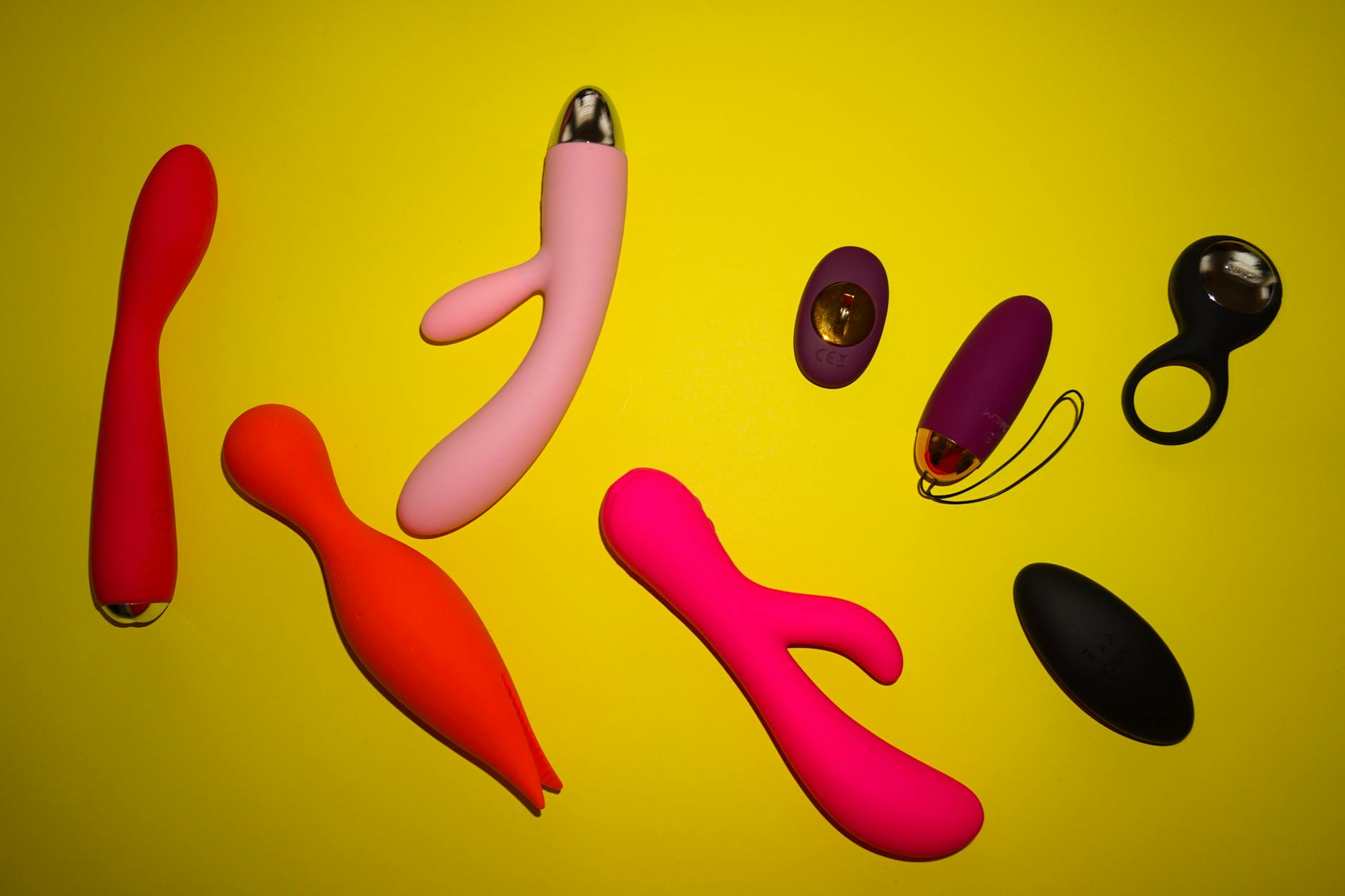
Photo by DRT.fm . on Pexels
The relationship component nobody mentions
If you're partnered, your sensitivity loss likely has an emotional layer too. Long periods of disconnection, conflict, or just the accumulated weight of routine can create what's called protective numbness. Your body learned that feeling less hurt less.
Rebounding from this requires a specific kind of conversation. Not "I want us to have more sex" or "I'm not attracted to you anymore." Instead: "I've lost touch with my own body, and I need to rebuild that. I'd like your support, which looks like patience and curiosity, not pressure."
If you're rebuilding intimacy after How to Rebuild Physical Intimacy After Emotional Disconnection, this becomes even more important. You're not just retraining your nervous system. You're also rebuilding trust and presence together. Those things require time and honesty.
When to involve a doctor
If you're experiencing pain alongside the numbness, or if sensitivity doesn't improve after 3-4 weeks of consistent practice, see a gynecologist. Sometimes muted sensation is a sign of reduced clitoral blood flow, pelvic neuropathy, or other things that benefit from medical input. A doctor won't judge. This is bread-and-butter for them.
If you're on medication that's causing the numbness, talk to the prescribing doctor. Don't stop the medication yourself. But there are often alternatives or add-ons (like bupropion if you're on an SSRI) that address the side effect.
The timeline and what to expect
Don't expect instant results. Some people feel shifts within a week. Others need 3-4 weeks of consistent practice. This isn't failure. Your nervous system didn't dampen overnight. It won't wake up overnight either.
What you will notice, if you're patient: tiny sensations that didn't register before. A shift in pressure tolerance. A moment where something actually feels good instead of neutral. A slight tightening or release. These aren't the destination. They're the signs that you're on the path.
FAQ
How long until full sensation returns?
It varies wildly. Some people regain full responsiveness in 4-6 weeks. Others take 2-3 months. The variables are stress levels, medication, hormonal status, and how long the numbness has been present. Consistency matters more than speed. One 15-minute session weekly will not move the needle. Three to four sessions weekly will. Think of this like physical therapy for your nervous system.
Can antidepressants and clitoral sensation coexist?
Yes, but not with the same approach. If you're on an SSRI or similar medication that's flattening sensation, the fix isn't more intensity. It's different sensation. A lemon clitoral vibrator often works better than other toys for people on these meds because the suction sensation uses different neural pathways. Some people also benefit from adding a second medication (like bupropion) that specifically targets sexual function. Worth discussing with your prescriber.
Is muted sensation the same as anorgasmia?
No. Anorgasmia is the inability to orgasm. Muted sensation is the inability to feel much of anything. You can have one without the other. That said, they often travel together. If you address the sensation loss, orgasm usually becomes possible again, even if it doesn't feel identical to before.
What if my partner feels rejected when I say I need solo practice time?
That's real, and it's worth naming directly. "I'm not rejecting you. I'm rebuilding my own nervous system. Once I can feel my own body again, we'll have better intimacy together. I need you to trust this process." If your partner can't hold that, that's a relationship conversation that might benefit from a therapist.
Does a Lem vibrator actually help with sensation loss, or is it just marketing?
The air-pulse technology genuinely does recruit different nerve pathways than traditional vibration. For about 70% of people with muted clitoral sensitivity, this difference is noticeable. That said, it's not magic. The real tool is the nervous system reset process. The Lem is a very good tool within that process, not a replacement for it.
What if nothing changes after a month?
Then you likely need professional support. See a gynecologist to rule out blood flow issues, hormonal shifts, or neuropathy. If that's clear, consider a sex therapist or trauma-informed therapist. Sometimes numbness is actually dissociation, and it needs different intervention.
The simplest next step
You don't need a perfect plan. You need one consistent practice. Pick a time when you can be alone, unhurried, and present. Commit to three 15-minute sessions this week with just your fingertips and maybe a light lubricant. Notice what you feel. Notice what you don't. No judgment. Then, in week two, introduce the Lem at its lowest setting. Same goal. Just noticing.
Clitoral numbness responds to this kind of patient, nervous-system-centered approach in a way that it doesn't respond to pushing harder. Your sensation is still there. It's just been turned down. And you have the power to turn it back up again.
Sources
Gottman Institute. (2023). Research on Couples and Conflict Resolution. Retrieved from gottman.com
Polaris, S. (2020). The New Topping Book: Lesbian Sex and Sexuality. Cleis Press.
Nagelaers, L., & Laan, E. (2020). "Changes in sexual function in women following gynaecological procedures." Current Sexual Health Reports, 12(3), 115-128.
Raifman, L. (2023). "Clitoral sensitivity and nervous system regulation: An integrative approach." Journal of Sex & Marital Therapy, 49(2), 134-149.